Attentiveness

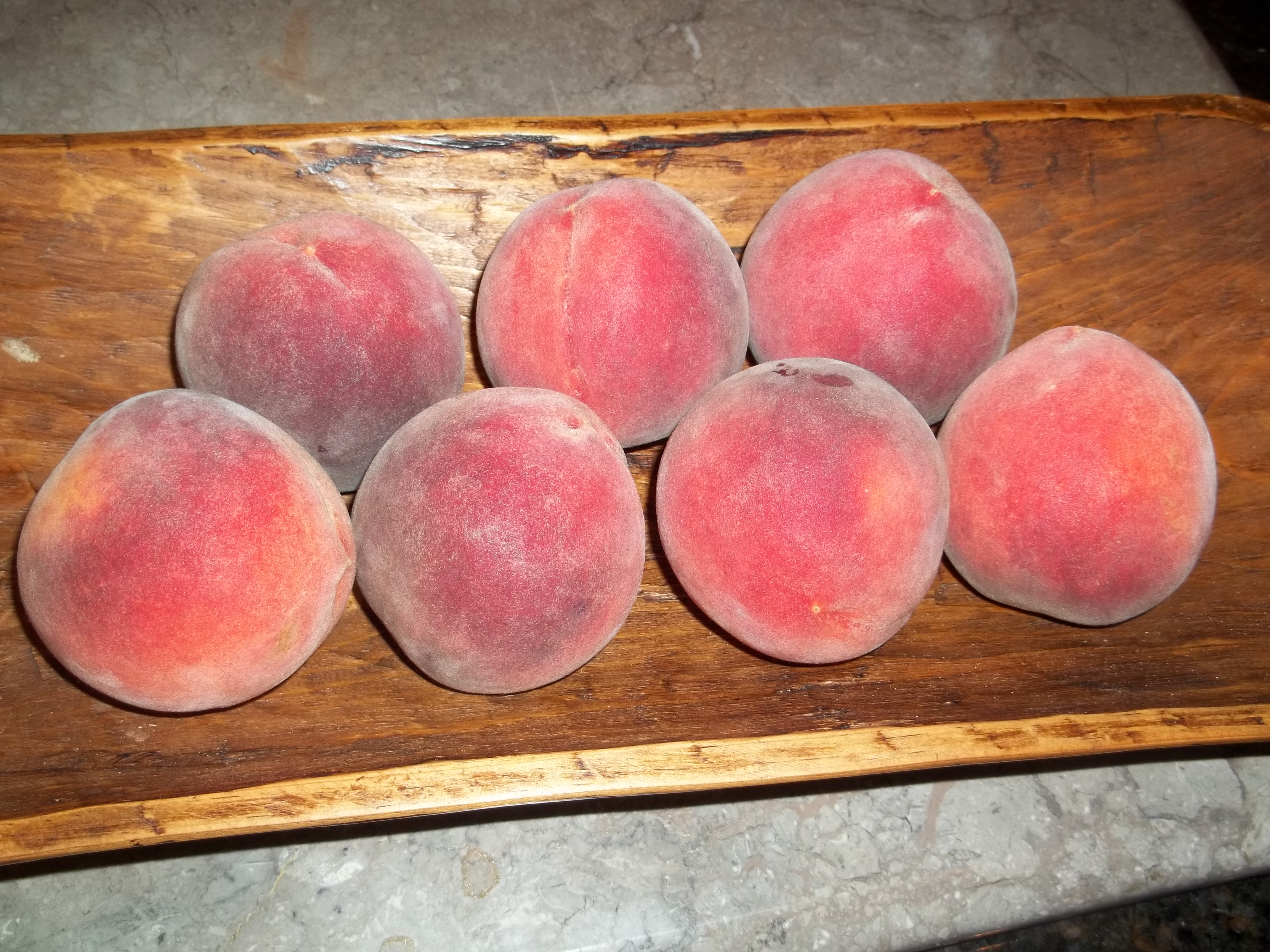
I use the lines from Mary Oliver which speak to paying attention, being astonished, and telling about it often.  I find it applies to so many things:  nature, of course, but also words that I read, objects that I find and touch, people and our conversation, both joys and pain.  My recent posts about paying attention with not only our eyes and ears but also our sense of smell sharpened my savoring of these extraordinary peaches!  They are a wonder to behold with their brilliant crimson and saffron colors, soft to the touch, and a succulent treat as you taste their sweetness. Even the seeds are so beautiful I can’t throw them away.  I have them lined up ready to let my granddaughter help me plant them.  When I enjoy a peach for breakfast, how could I not be attentive to the way it is beautiful inside and out?

“Ten times a day, something happens to me lie this – some strengthening throb of amazement – some good sweet empathetic pin and swell.  This is the first, the wildest, and the wisest thing I know: that the soul exists and is built entirely out of attentiveness.”   ~ Mary Oliver, New and Selected Poems, Vol. 1

“You can have the other words – chance, luck, coincidence, serendipity.  I’ll take grace.  I don’t know what it is exactly, but I’ll take it. ”  ~ Mary Oliver, Winter Hours
Breathe

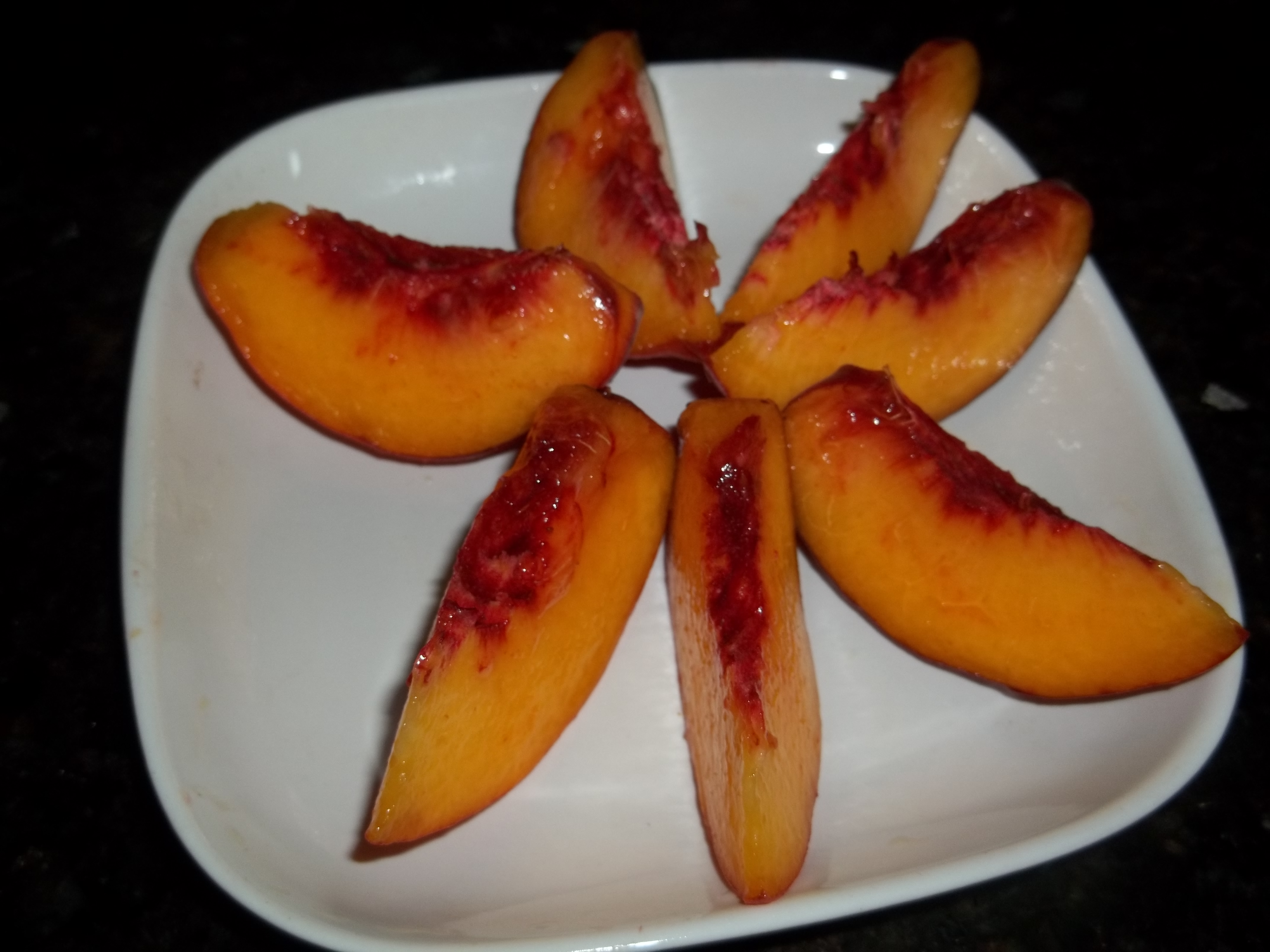
When I visited one of the garden centers in Houston recently, this sign caught my eye since I had just written the previous post about fragrance.  Many of the plants in our back yard garden could be labeled “featuring fragrance.”  A plant that is new to me is actually a very old-fashioned one.  Sweet almond verbena reaches out to my nose with its sweet smell and a hint of vanilla.  It is no surprise to find that this reminds me to pray with each breath, inhaling God’s goodness and peace and letting out all my fretting. Remembering the Biblical references to our prayers as a fragrant incense, I smiled when I read that another name for this plant is Incense Bush.  Breathe!

Lichen

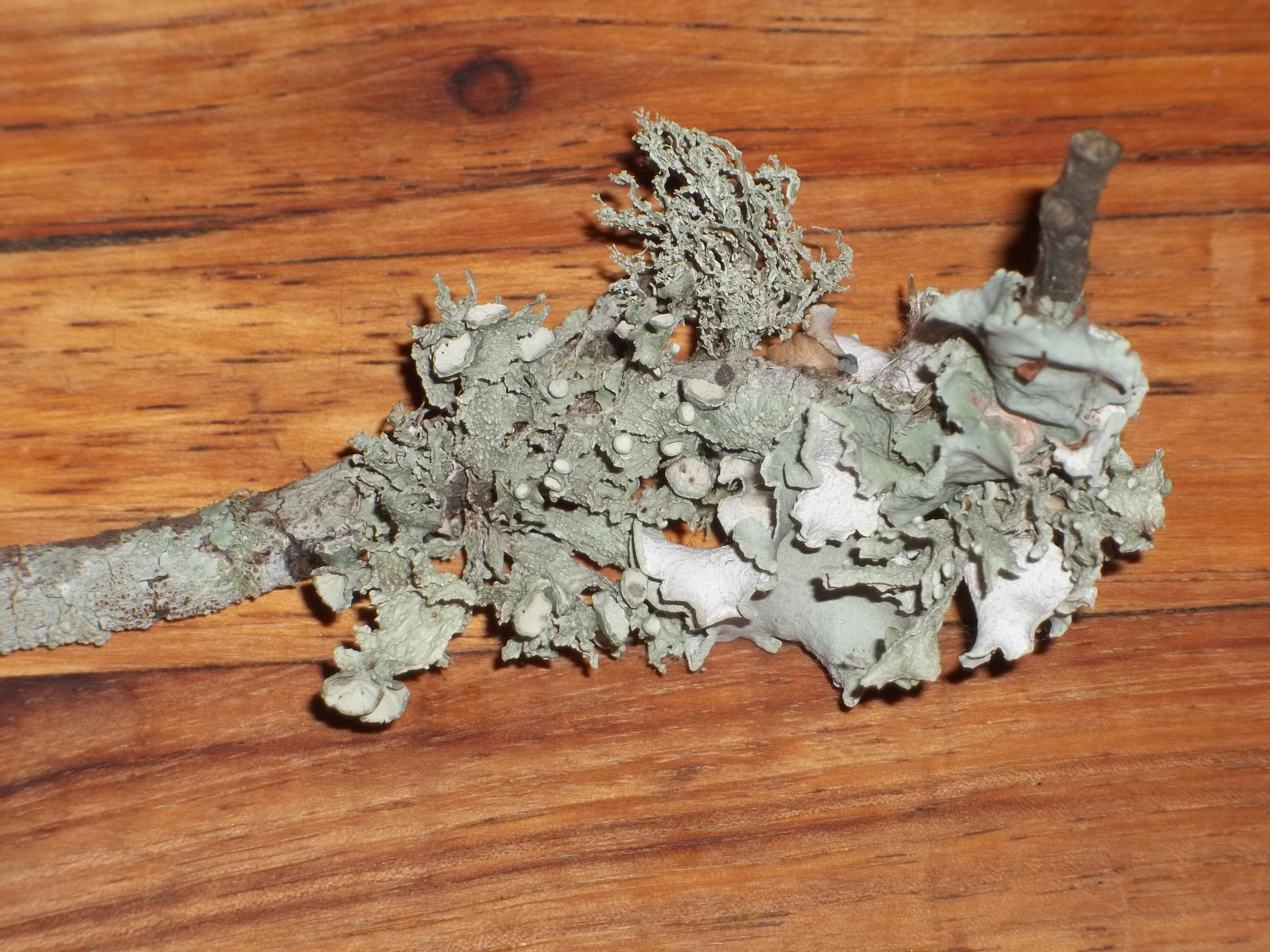
Lichens are intriguing. Often the first form of life to colonise a new area of rock, they are commonly seen and also commonly overlooked. They frequent older buildings, stone walls, and most perennial plants, particularly trees. Lichens are important because they often occupy niches that, at least sometime during the season, are so dry, or hot, or sterile, that nothing else will grow there.

In the hot and dry times in my life that seem unproductive, it may be that Grace is growing a bit of lichen – some small ruffled newness that needs no notice but still proclaims life and growth.

Yes

It is easy to fall prey to complaining these days when the temperature registers 105 and most people, animals, and plants slow their pace and wilt.  I remind myself that the same blistering sun that sears my skin and makes getting into my truck seem like opening an oven door also flavors my herbs and ripens the figs on our tree. Lord, help me be alert to the yes in every day.

i thank You God for most this amazing day:for the leaping greenly spirits of trees and a blue true dream of sky; and for everything which is natural which is infinite which is yes
(i who have died am alive again today, and this is the sun’s birthday; this is the birth day of life and of love and wings: and of the gay great happening illimitably earth)
how should tasting touching hearing seeing breathing any–lifted from the no of all nothing–human merely being doubt unimaginable You?
(now the ears of my ears awake and now the eyes of my eyes are opened)

— from E.E. Cummings: Complete Poems 1904-1962, by e. e. cummings

Sabbath Song and Shade

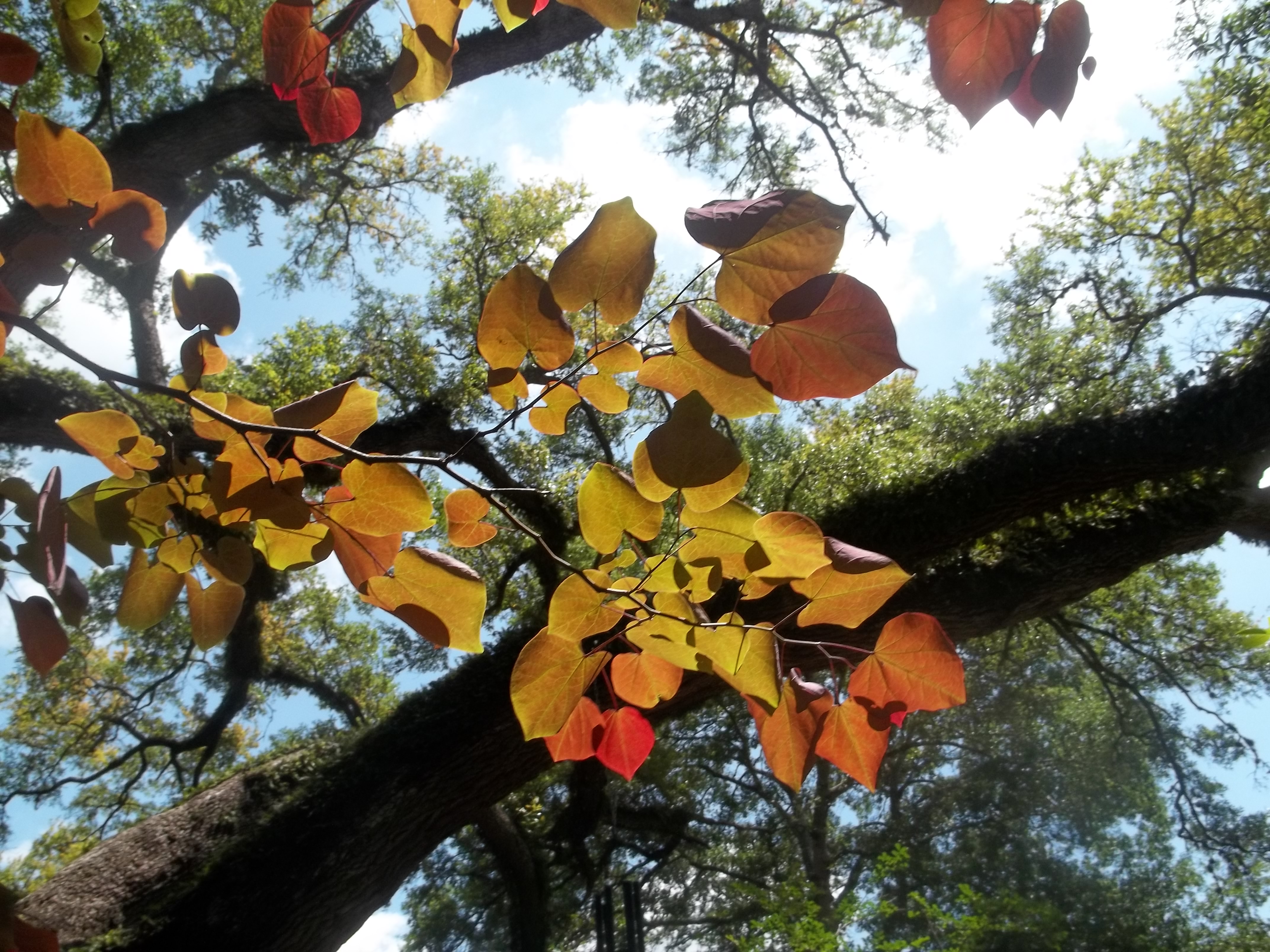
Image of Redbud tree leaves in prayer garden of First Baptist Church, Richmond, Texas. 

The clearing rests in song and shade.

It is a creature made

By old light held in soil and leaf,

By human joy and grief,

By human work,

Fidelity of sight and stroke,

By rain, by water on

The parent stone.

We join our work to Heaven’s gift,

Our hope to what is left,

That field and woods at last agree

In an economy

Of widest worth.

High Heaven’s Kingdom come on earth.

Imagine Paradise.

O Dust, arise!

~Wendell Berry, Sabbath Poem VII (1982)

“Roses, Late Summer”

If I had another life I would want to spend it all on some unstinting happiness.

I would be a fox, or a tree full of waving branches. I wouldn’t mind being a rose in a field full of roses.

Fear has not yet occurred to them, nor ambition. Reason they have not yet thought of. Neither do they ask how long they must be roses, and then what. Or any other foolish question.

-Mary Oliver, excerpted from “Roses, Late Summer”


I admire Mary Oliver’s poetry.  These lines, as do so many of hers, tug at my heart with an “oh, yes.”

I read between her lines that for me are describing the desire to be rid of the prickling, thorny, uncomfortable, and sometimes unnecessary things on which we spend ourselves. Oliver chooses a fox, a rose, and a tree – all created by God and lovely, although we are never told those things were created in God’s image.  Only man, with all his questions and fears, is said to be made like Him and for being with Him, not just His creation.  Only we have reason and relationship.  I revel in this life in relationship with my Creator and the family He has given me. I know who answers my foolish questions and calms my fears. I am practicing happiness as I celebrate this moment.  I think Mary Oliver likes what lies between her lines when I read them.

Waiting…

“To wait with openness and trust is an enormously radical attitude toward life. It is choosing to hope that something is happening for us that is far beyond our own imaginings. It is giving up control over our future and letting God define our life.” Henri Nouwen

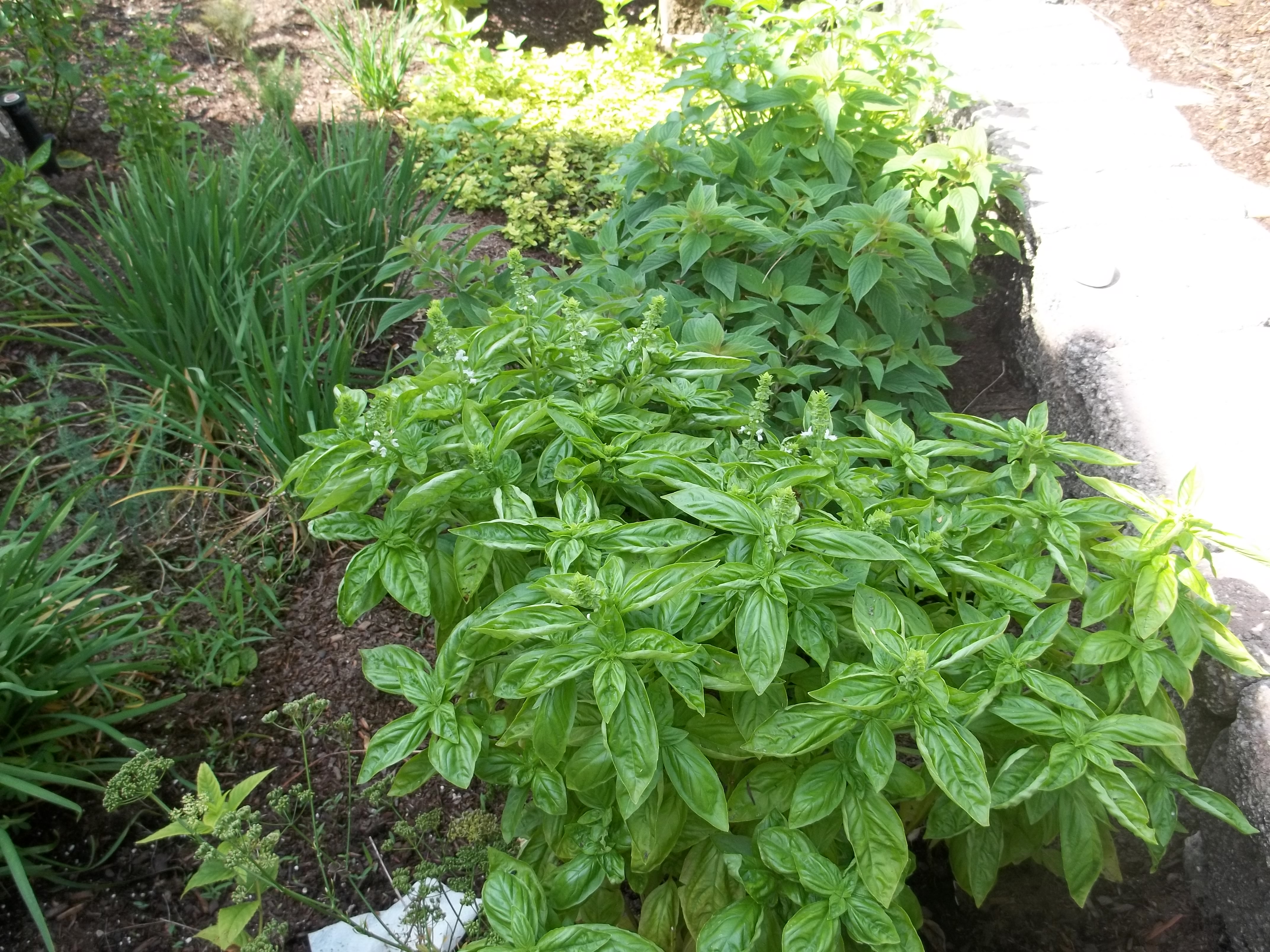
My garden calls me to remember much about waiting with openness and trust – to choose hope.  All around me are signs of beginnings and growth.  Not all happen when I predict.  Many don’t develop on the same time-table as previously experienced.  But if I am attentive, the astonishing beauty and meaning is indeed beyond my own imagining.

Easter Joy

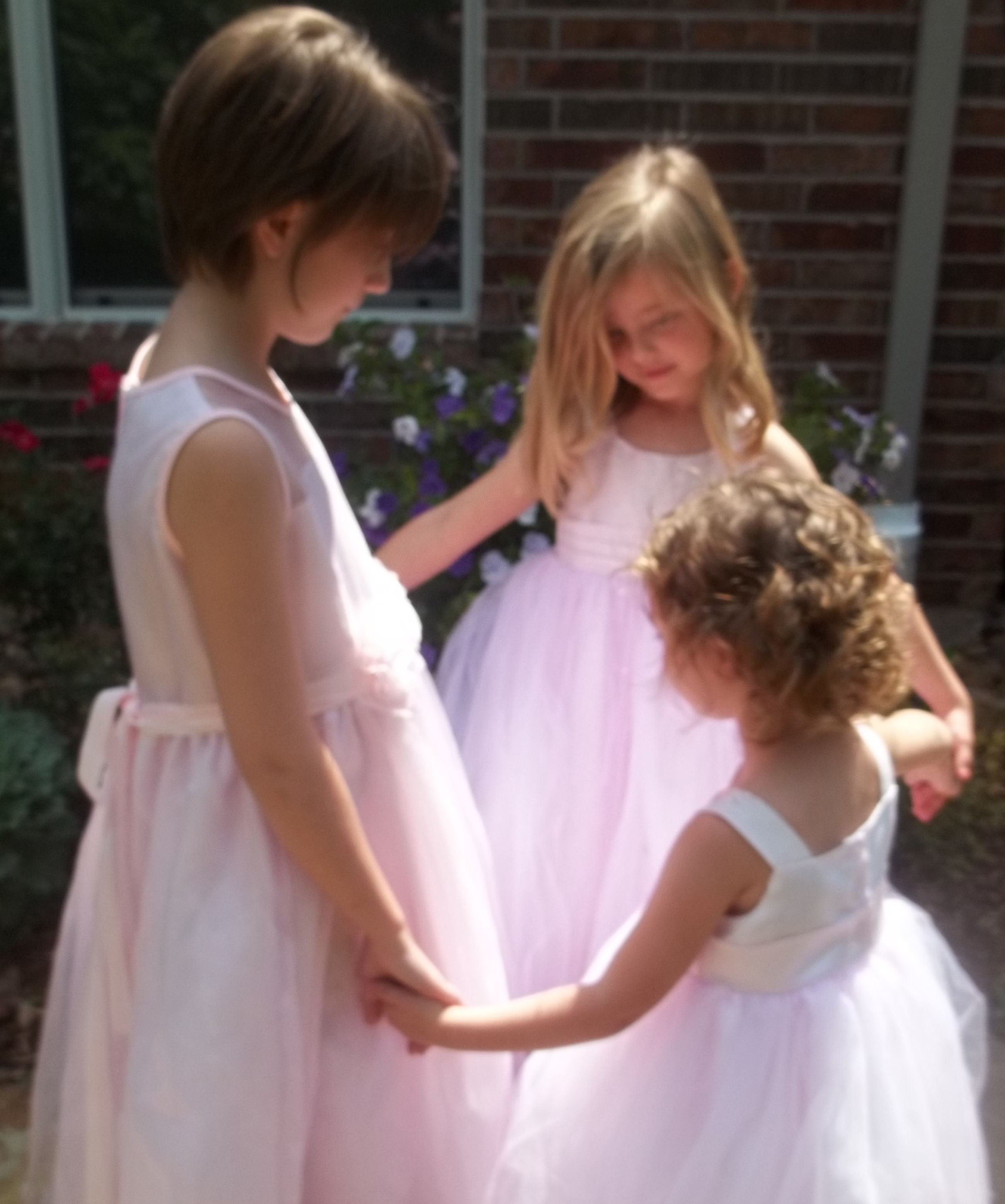
Our granddaughters are a joy for many reasons.  One of those reasons is the way they express their own joy.  On Saturday, long before we had fun coloring Easter eggs, and certainly before Easter morning with the excitement of baskets and the donning of frothy pink dresses, Maddie took the sidewalk chalk out to decorate our front walk.  She worked on several Easter egg drawings, but at the beginning of the sidewalk, she drew the pink cross you see in this photograph.  If you look very closely, you can see at the top what she thinks the cross means.  “Jesus Loves You.”

Markers

I have previously written about my love for feathers, how a long time I ago I began to recognize the finding of a feather as a small signal that God is present.  Often when I pray for myself or others I pray for hiding under the shadow of His wing.  It is very simple, I choose these tiny found objects as reminders of how God has been and will be with me.  This is not the only reminder, there is evidence all around me in my home and garden.  Recently as I was reading passages in the Old Testament which speak of the stone markers erected to remind both present and future generations of God’s help, I realized these and my feathers are doing the same thing – simply saying “remember!”

“Samuel took a large stone and placed it between the towns of Mizpah and Jeshanah. He named it Ebenezer—”the stone of help”—for he said, “Up to this point the Lord has helped us!” —1 Samuel 7:12, NLT

Here I raise mine Ebenezer;
hither by thy help I’m come;
and I hope, by thy good pleasure,
safely to arrive at home.
Jesus sought me when a stranger,
wandering from the fold of God;
he, to rescue me from danger,
interposed his precious blood. —Come, Thou Fount of Every Blessing

March 1 on a South Texas Country Road

March 1 on a South Texas Country Road

Winter palette fades.

Painted over by Springing.

Weary gray tinges green.


Bare branch silhouette

 Softens, hazed in chartreuse fog.

Baby leaves split tight coats.


Shiny buds unfold

Clover, dandelion, moss

Each green different


 Why call it Red Bud?

It’s lilac, pink, violet.

Purple vetch vines, twines.


 Blue wood violet,

Saffron puffs of sweet Huisache

Fill air with fragrance.


Indian Paintbrush

                                             Tiny torches start to blaze,

scatter scarlet flames.


Not yet showing bloom,

  Bluebonnets, Crimson Clover

soon add to Spring’s song.


 Bleak chill of winter

Gives way to resurrection,

melody of Life.