Finding a Place to Grow

PalmTreeFern

I have never been fond of palm trees in my garden landscape. To me, as close as we live to the coast, they seem much more at home near the ocean, fitting right in with the sand and sun and waves. However, I adore ferns, and grow several different varieties in our wooded back yard. But as you see here, there is definitely a friendly relationship between these ferns and the large palm where they so happily grow. I noticed this cluster of ferns when I took my 6 month old granddaughter out in her stroller for a walk one morning. This palm is the centerpiece of a small pocket park in their neighborhood. I don’t think I had ever truly paid attention (sorry, Mary Oliver!) and been astonished at the sight, and certainly had never talked about how these graceful little ferns happen to find enough to grow on in what seems to be just a notch left by palm fronds as they age and break off.

In this case, the palm’s growth habit (aging?) creates a little pocket where debris and leaves collect. The point where the palm fronds once attached to the trunk – called boots – collect leaf litter that composts to create a growing medium that ferns love. This is a natural occurrence  in areas like ours  where wet, humid conditions favor the ferns.

The ferns are epiphytes. This means they are growing on another plant that serves as a host, but they don’t get their nutrition directly from the host plant or cause any it any harm. Spanish moss is another common epiphyte.

Another little fern called the Resurrection Fern can be found growing on a palm trunk, although the most common choice for this fern around here are the large old live oaks where the fern grows along the branches looking like brown moss until it begins to rain. Then it transforms into emerald lace!  (See my previous post   http://tinyurl.com/TheOldOakTree)

I am glad I paid attention to these feathery green surprises. One day tiny spores were  floating around and a puff of wind carried them to just the right spot to root and grow. I am reminded of the lovely phrase used by Hildegarde of Bingen:  A Feather on the Breath of God. Maybe we can learn to let go enough to be shown just the right place to grow. And it just might be an unlikely place, an extraordinary place, one we would never have known to dream of.

“Pay attention

Be Astonished

Tell about it.”  ~ Mary Oliver


PalmTreeFern2

Nourishment

IMG_0798 (2)

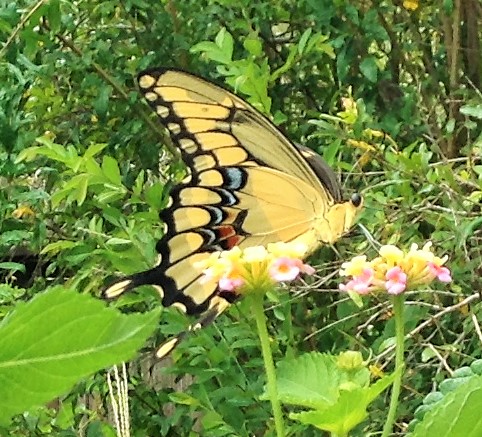
Milkweed and Lantana in our garden have continued to thrive and bloom in our South Texas heat.  I am grateful for the splashes of color from their small flowers.  But I am more grateful that they provide nectar for these giant swallowtail butterflies.  I understand that this butterfly will feed only from these plants, and afterward will find my Meyer lemon tree where they will lay their eggs.  These, of course hatch into  caterpillars with voracious appetites for citrus leaves, and then form their chrysalis where they become these lovely winged creatures. The cycle never ceases to amaze me.  I am blessed by this beauty.

Without stretching the comparison too far, I consider how, given the choices I have for the care and feeding of my soul, I choose that which nourishes me in the best ways for growing and changing.  I want to be more intentional in my choices of entertainment, the books I read,the art and music I enjoy,  the thoughts with which I fill my mind.

IMG_0793 (2)

IMG_0790 (2)

Summing it all up, friends, I’d say you’ll do best by filling your minds and meditating on things true, noble, reputable, authentic, compelling, gracious—the best, not the worst; the beautiful, not the ugly; things to praise, not things to curse. Put into practice what you learned from me, what you heard and saw and realized. Do that, and God, who makes everything work together, will work you into his most excellent harmonies.”

Philippians 4:8   The Message 

Giving Back

IMG_0738

 In the area of East Texas where I grew up, lavish blooms of a vigorous climbing vine grew not only in back yards and trailing over porches, but also in the woods, where it draped over tree branches, adding clouds of light purple clusters of fragrant flower clusters to the late Spring landscapes. When I go back there even now I watch for the extravagant (if invasive) Wisteria that is loved by many.

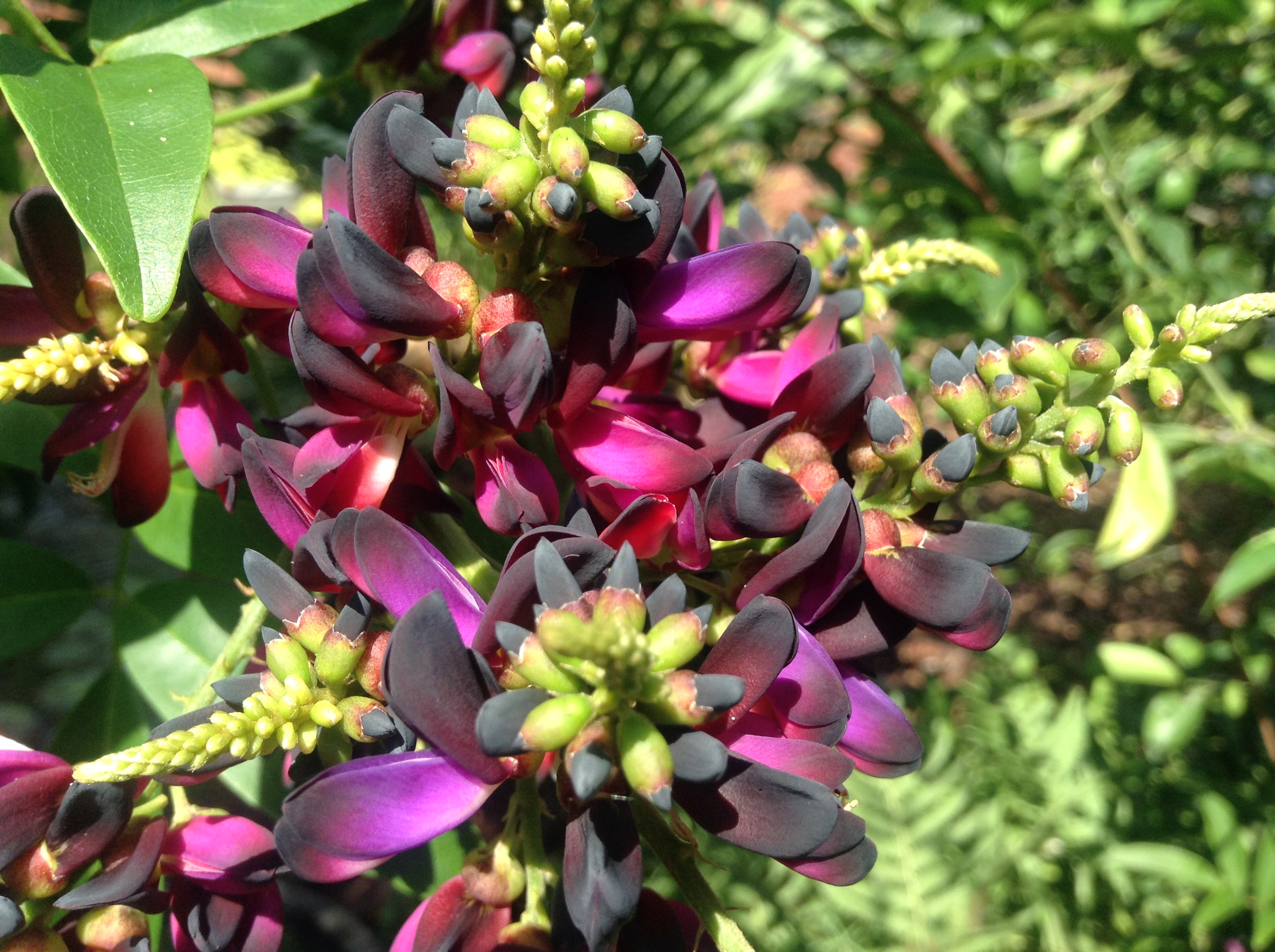
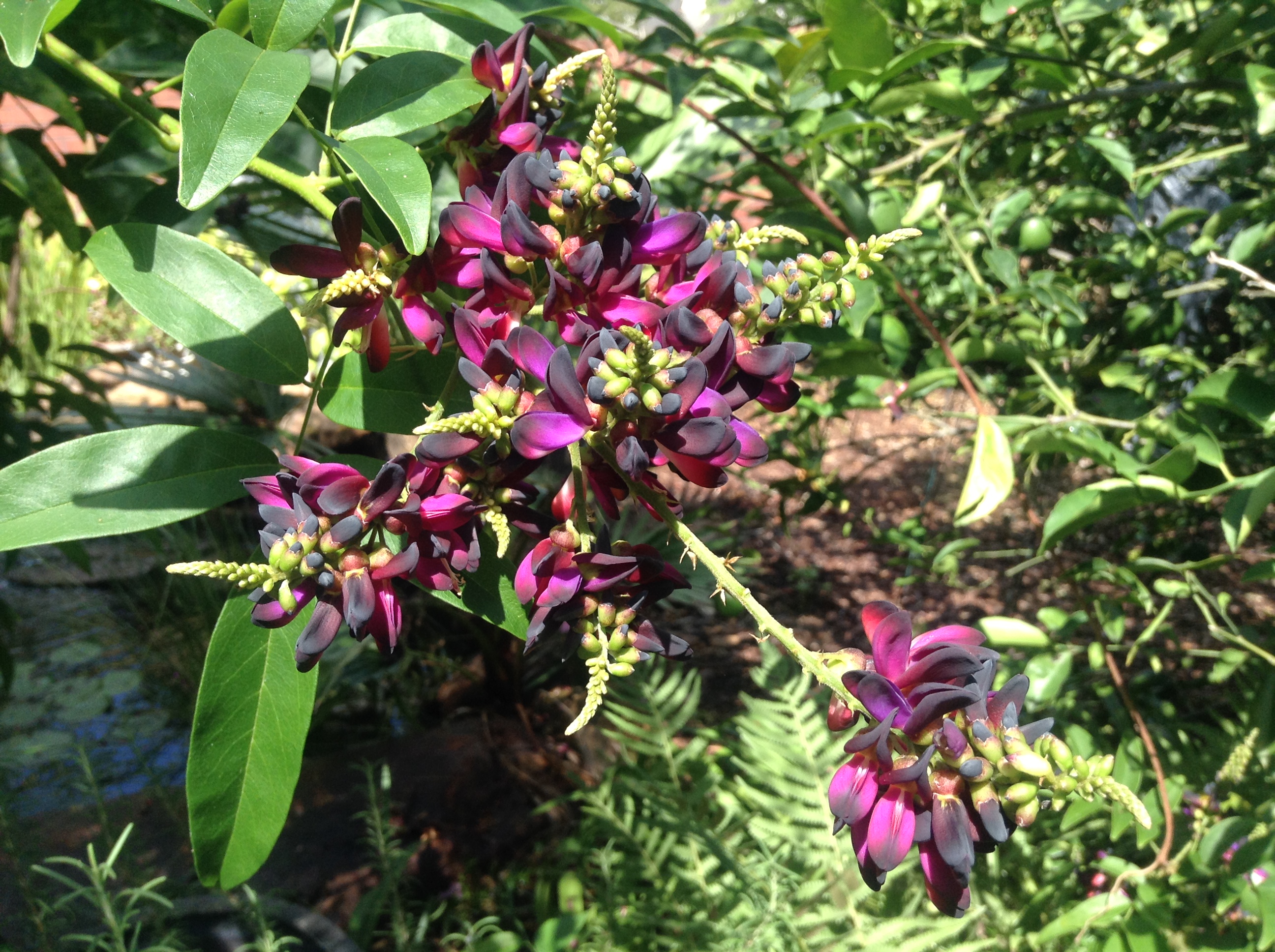
A number of years ago I began to admire another vine that grows in our part of Southeast Texas that is also called Wisteria.  It is named Evergreen Wisteria because of its hardiness and its ability to bloom summer through fall.  Its smaller clusters of  deep, rich purple make it a spectacular garden plant.For support, ours shares a small gazebo with a Peggy Martin rose.  As much as I like these lovely purple blossoms, I recently learned something about the plant that makes me admire it even more. It doesn’t just soak up soil nutrients and water – it gives back!

This vine is not in the same family as our Wisteria in the woods, which some call Chinese Wisteria.  This plant is a legume, and much like other legumes, evergreen wisteria fixes nitrogen in the soil, which enhances the amount of nitrogen available for other plants growing nearby, It is a good companion plant for others which are heavy nitrogen feeders.

IMG_0737Along with the many other lessons learned in the garden, my lovely Evergreen Wisteria reminds me of the value in perserverance, the joy of sharing beauty, the need for being trained on a Trellis that does not fail, and – that as I have been given, so I must give so that those who share my garden space can thrive.

“Beauty, youth, and strength are flowers, but fading seen.

Duty, faith, and love are roots and evergreen,”

~fom the Old Knight,by George Peele


Don’t Wait to Celebrate

IMG_0712

tissue paper ruffles

unwrap scarlet star

releasing arc of fireworks

today alone is mine

IMG_0724folded petals crumple

fireworks fade into the night

don’t wait to celebrate


Please see a related post from last year:  www.stonesandfeathers.wordpress.com/2013/07/27/i-have-this-day/


Taking the Heat and saying Thank You


Summer’s heat and humidity are  the most common complaints on the South Texas Gulf Coast in the middle of July.In the Spring I hear “April showers bring May flowers”, but there don’t seem to be any comparable sayings pointing to blessings that a 106 heat index brings. However, the gifts are there, and I am reminded to count them.  Here are a few.

IMG_0583

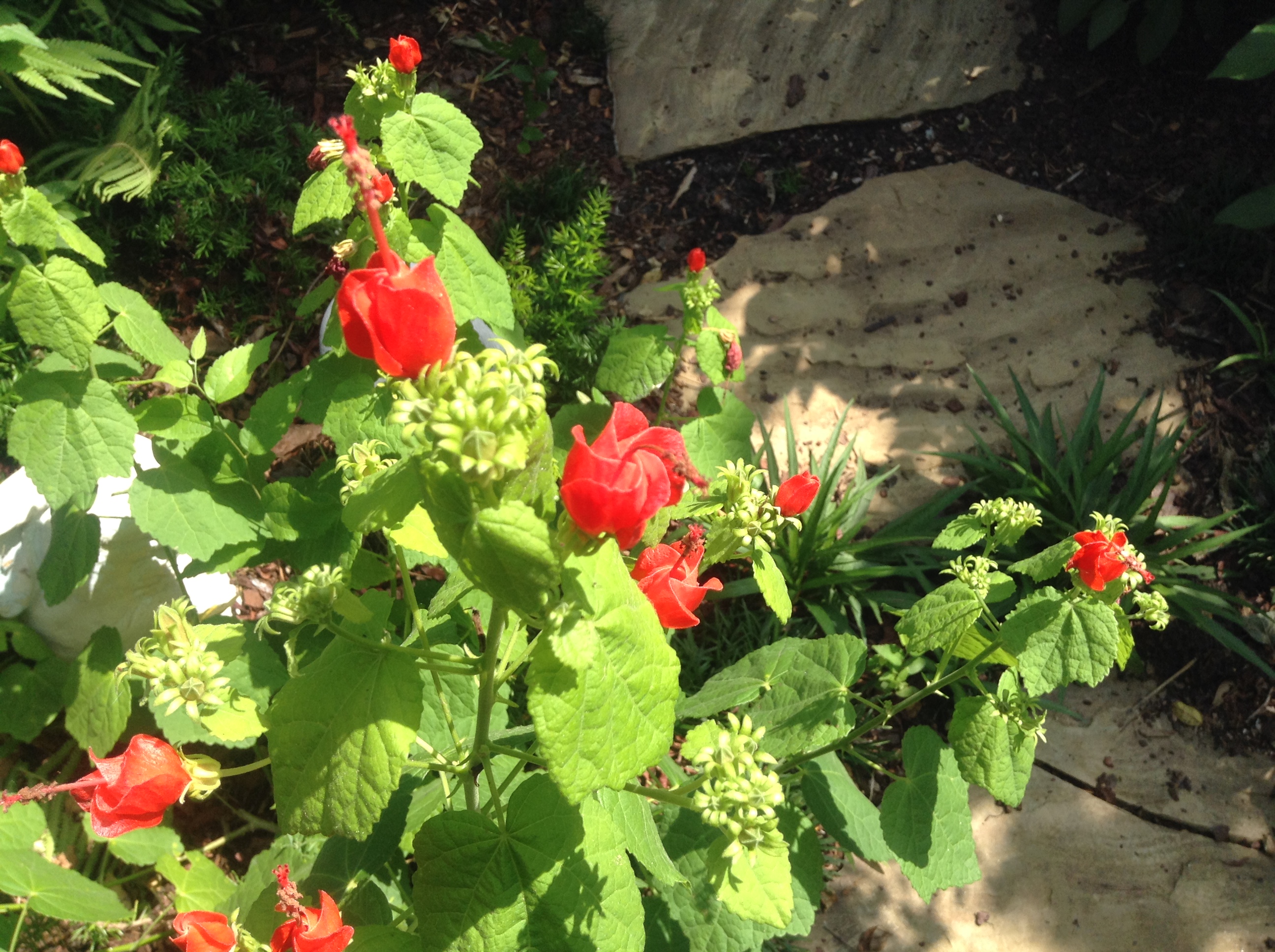
Summer’s heat produces these vermilion flowers twisted into a tube with extended stamens protruding from the whorl. Some call the plant bleeding hearts; my grandmother called them Turks’ Caps and always had them in her East Texas yard. I adore these little twisted turbans.  Their scarlet flashes are rivaled only by the red birds that like the berries left after the flowers fade.

IMG_0080

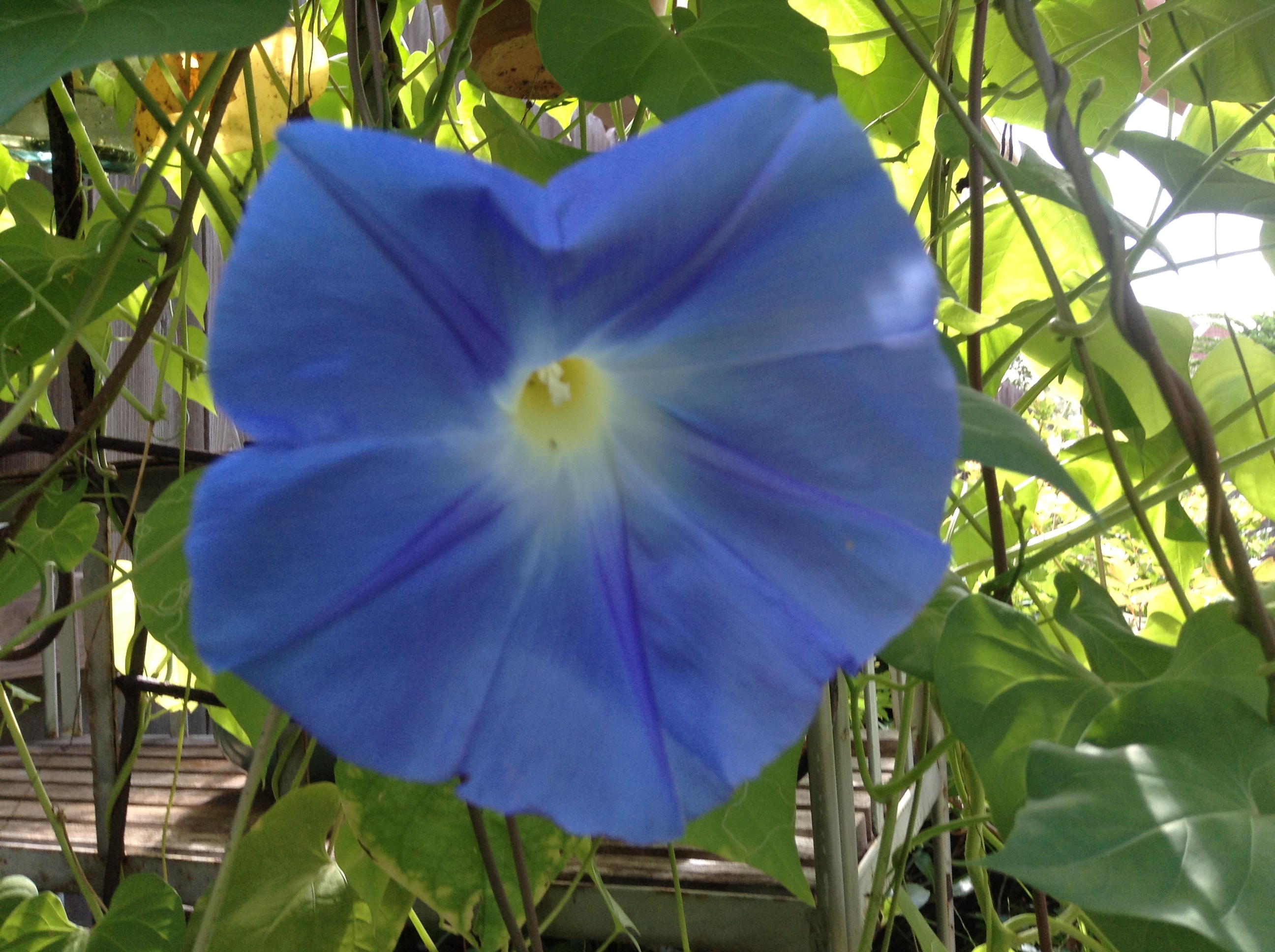
Morning glories!  Without the heat from the morning sun, they would stay closed shut. But with morning light, their fragile cobalt petals unfurl so the star in their throats can shine.

IMG_0483

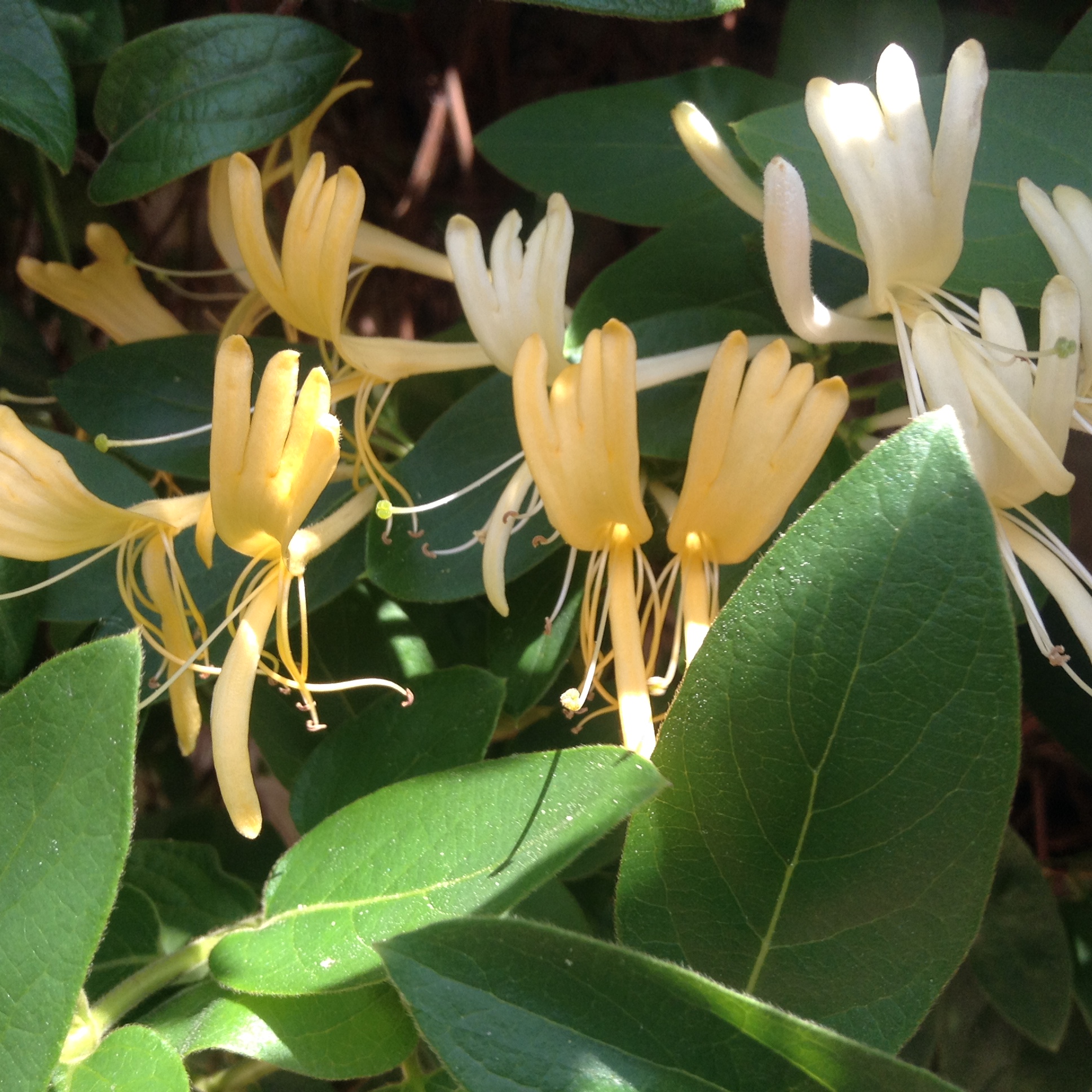
Honeysuckle vines reach for the heat and produce sweet nectar- bearing blooms that lure me with their fragrance.

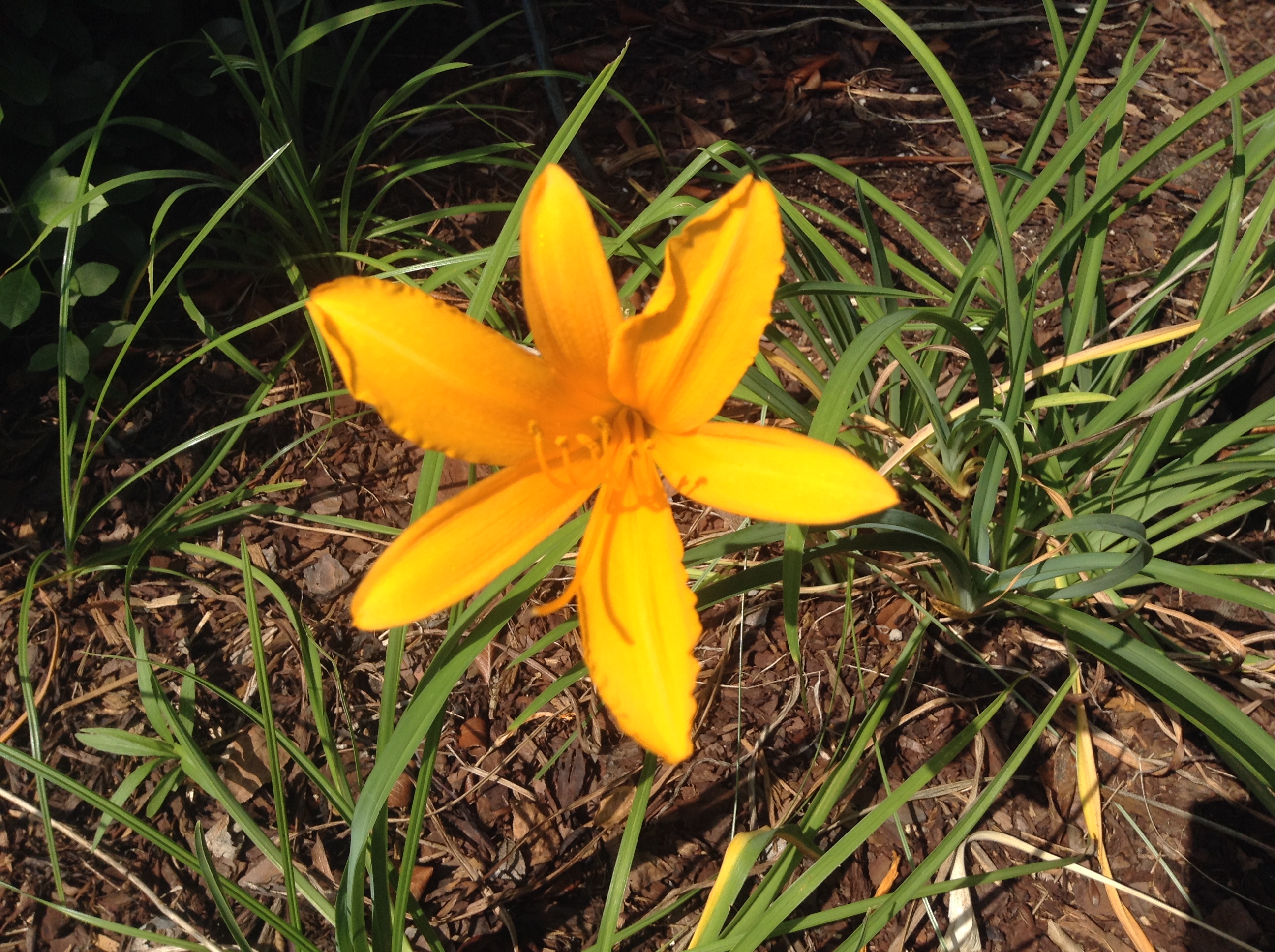
IMG_0580Golden day lilies bare their cheerful faces to sunshine.


IMG_0577

Peppers of all shapes, sizes and colors thrive in summer’s furnace along with yellow squash, zucchini, and melons.  All these add nutritious goodness to our summer suppers.

IMG_0573

Figs!  Our abundant crop of figs is plenty to enjoy and more than enough to share.

IMG_0378

Peaches are at their best in summer’s heat.  My favorite variety ripens in August.
IMG_0390

Fennel, basil, rosemary, sage, parsley, and all my favorite herbs don’t even begin to thrive until it begins to get hot. Cutting them just before they go into a light summer soup or salad gives a rich, fragrant treat for the cook!

Still counting…

I am grateful.


Celebration

IMG_0407

This will be a week of seeing night skies shot through with neon sprays of light accompanied by gasps and ahs as dramatic firework displays entertain crowds while smaller scale backyard pyrotechnics fizzle and pop.

 I love better, bursts of bloom from our garden

 crepe myrtle trees heavy with crinkly scarlet clusters

lifted  against snowy clouds

free-floating in cerulean sky

I love better,stars blazing

 in the heart of a morning glory

Too, the tall spires of indigo salvia,

 fragrance from tiny white spears of sweet almond

seed fronds of native grasses waving and dancing

afternoon breezes coaxing music from wind chimes

celebration


This Morning…

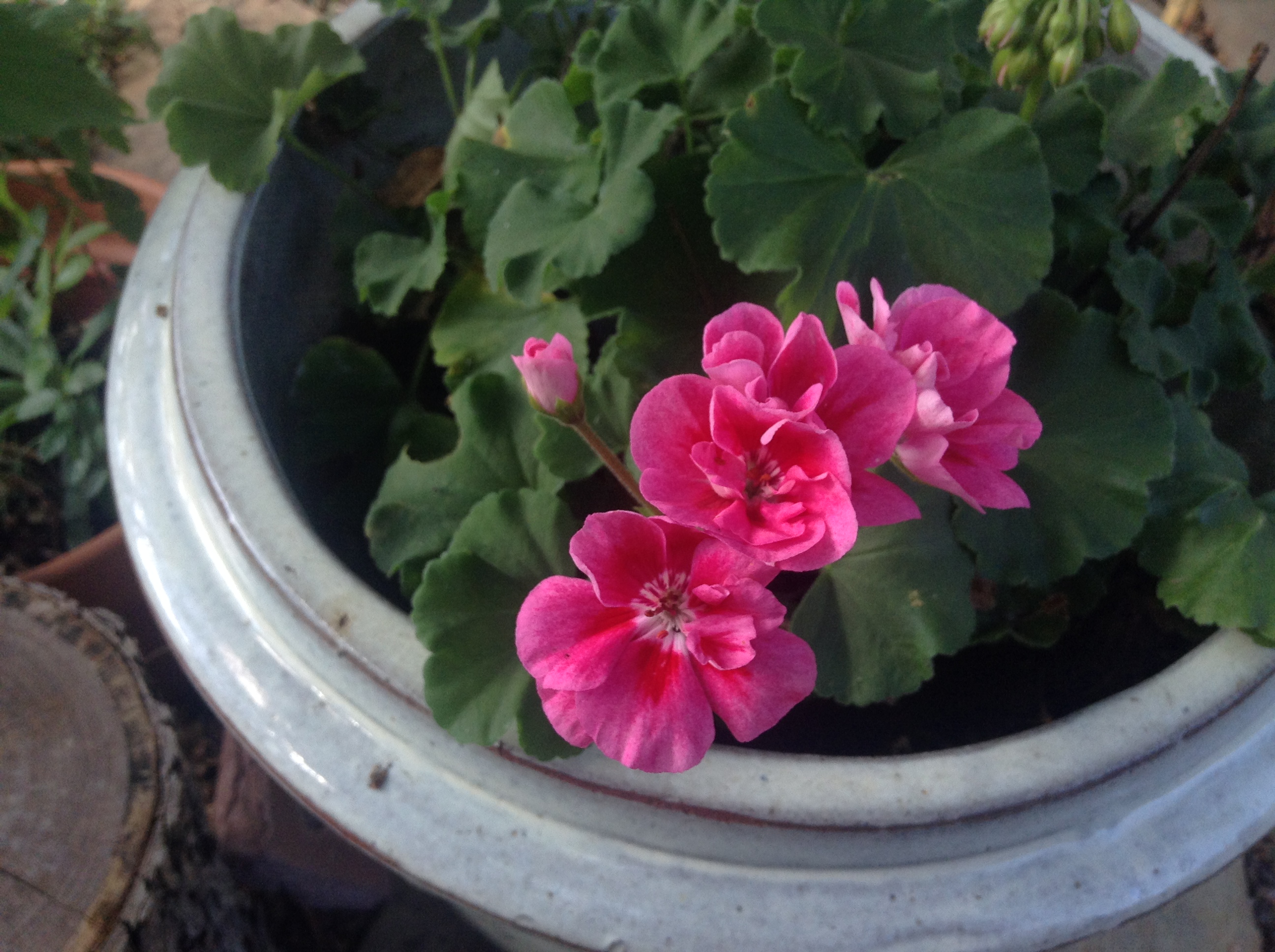
IMG_0399dear familiar line and color

velvet spread of leaf

magenta and vermilion petal

held in the sweet curve

of glazed garden pot

one brief glimpse

telling me

this is home

“The sweetest thing in all my life has been the longing — to reach the Mountain, to find the place where all the beauty came from — my country, the place where I ought to have been born. Do you think it all meant nothing, all the longing? The longing for home? For indeed it now feels not like going, but like going back.”

~ C.S. Lewis, Till We Have Faces

As If

006

“I who am blind can give one hint to those who see: Use your eyes as if tomorrow you ~would be stricken blind. And the same method can be applied to the other senses. Hear the music of voices, the song of a bird, the mighty strains of an orchestra, as if you would be stricken deaf tomorrow. Touch each object as if tomorrow your tactile sense would fail. Smell the perfume of flowers, taste with relish each morsel, as if tomorrow you could never smell and taste again. Make the most of every sense; glory in the beauty which the world in all the facets of pleasure reveals to you through the several means of contact which Nature provides.”   .~ Helen Keller

The commonly believed myth regarding the loss of hearing or sight is false.  People who are blind or visually impaired are not endowed with a sharper sense of touch, hearing, taste, or smell. To compensate for their loss of vision, many learn to listen more carefully, or remember without taking notes, or increase directional acumen to compensate for their  lack of functional vision. In other words, they pay more attention, using their senses in a more mindful way.  They make choices.

If I am never silent, if I surround myself with the noise of machines and electronic entertainment constantly, I will most likely never hear birdsong or water trickling over rocks. I have the choice to “unplug,”  go outside for even a brief walk in the garden and make the most of my senses, to “relish”, as Helen Keller phrases.

What are some of the ways you practice this?