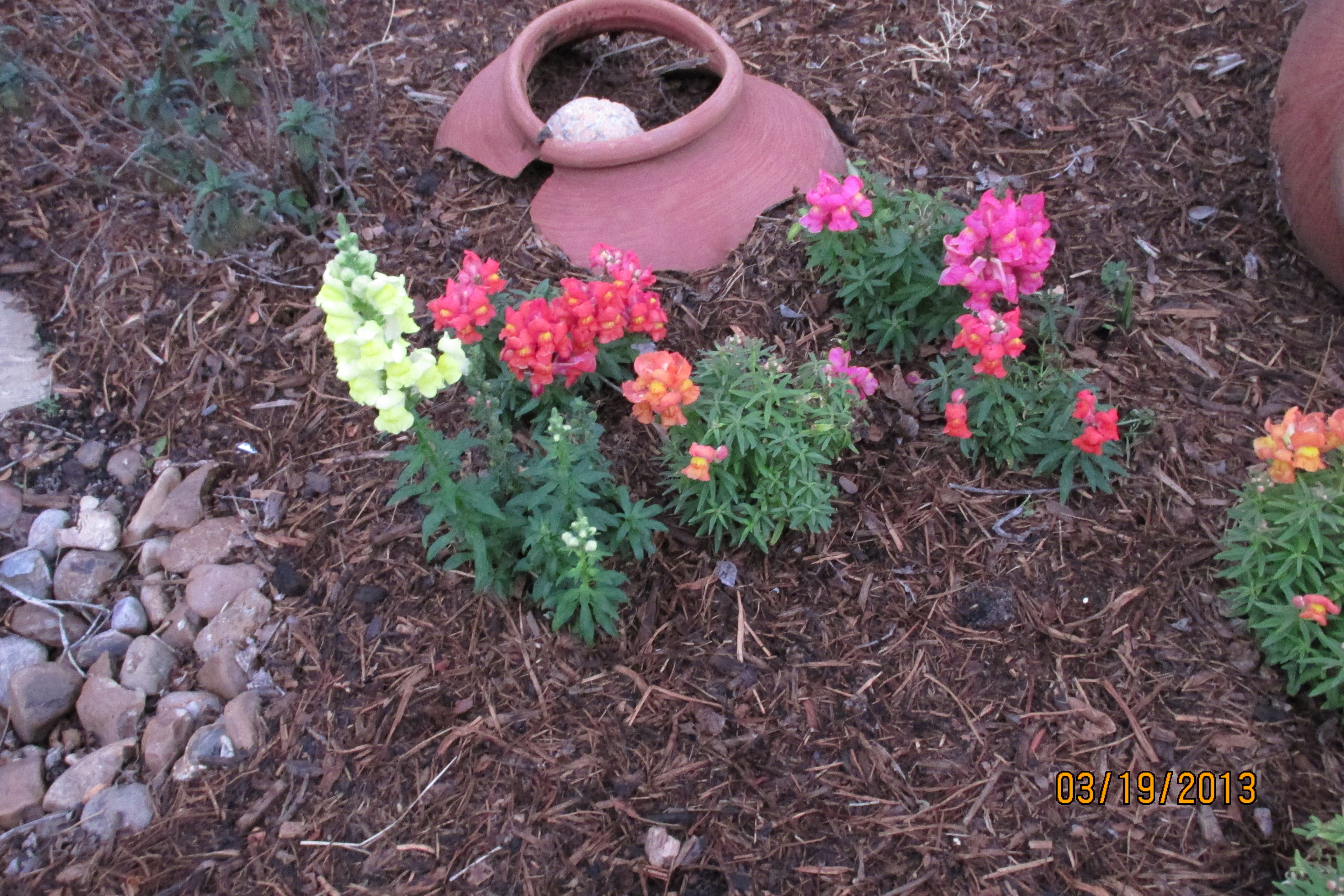
Seed finds damp earth
time to be broken
shed its old brown coat
and change forever

Seed finds damp earth
time to be broken
shed its old brown coat
and change forever

Wanting to choose plants for my garden that don’t need constant watering and fertilizing, I favor native Southeast Texas plants. I didn’t plant the large bushes of Lantana that are showing up this time of year, growing from the roots in a few days of sunshine. The birds did! The plant produces deep purple berries which are poisonous to cattle, sheep and humans,but birds love them and spread the seeds. Bees use the nectar in making honey, and the tube flowers, are excellent food for many butterflies. Lantana thrives in the full summer sun and heat, requiring little water and taking the blistering heat of summer by covering itself with multi-colored flowers shaped like tiny nosegays.
I am realizing that many of the plants I remember in my grandmother’s and mother’s flower beds were volunteer, reseeding or re-emerging each year.
Reseeding. Returning.
Simple, ordinary flowering
of color and beauty
reminding me of Grace,
both perennial and volunteer
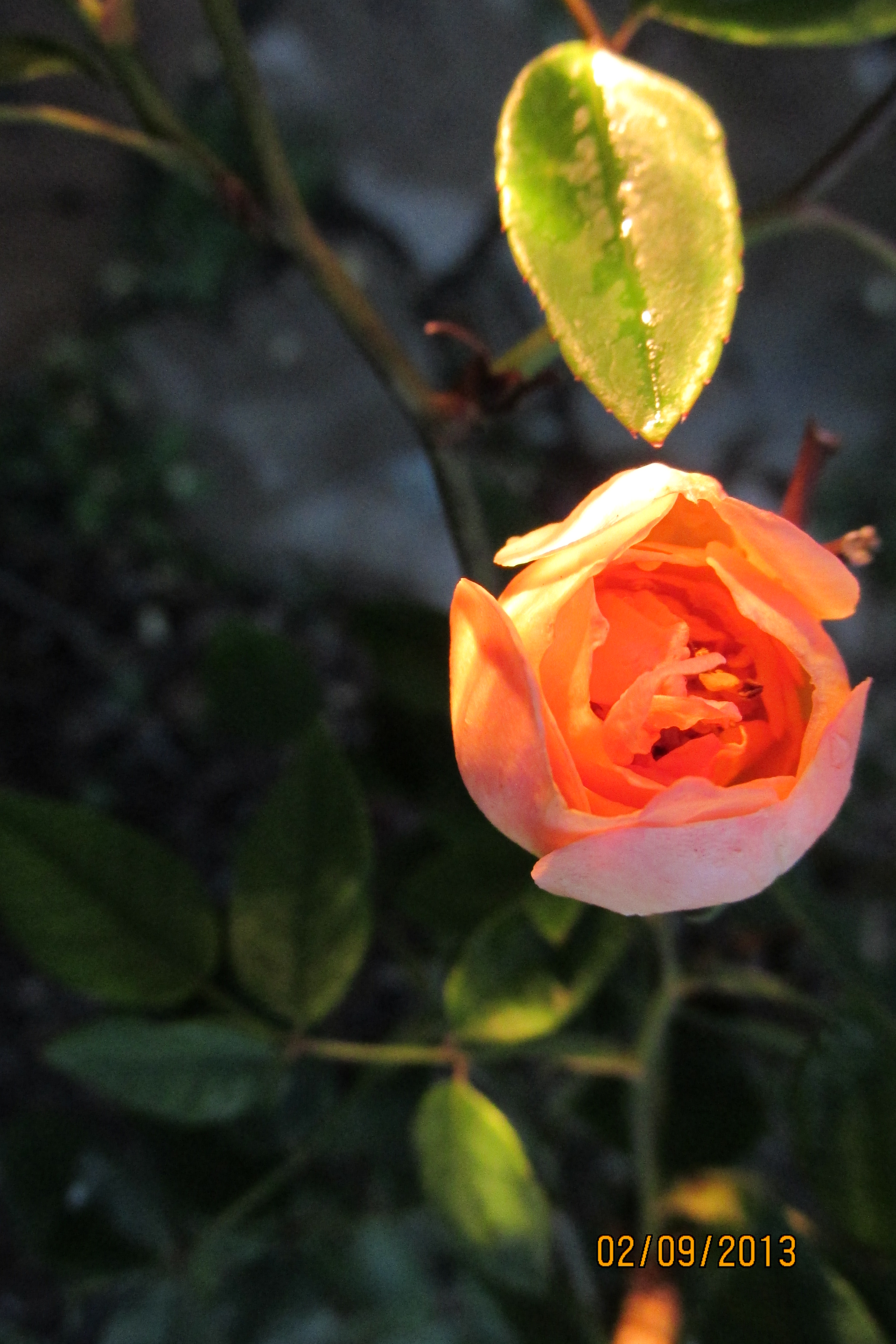
Pewter skies and gentle rains yesterday gathered into thunder clouds and stormy weather today, so I stay inside, grateful for the morning last week when I took my camera into the morning light to receive the gifts of beauty offered by this climbing Noisette rose, whose name is Crepuscule. I don’t think the name is a lovely one, sounding harsh to my ears, but the word means twilight, that time of day just after sunset, and the flowers hold the memory of sunset in its unfurling petals. The loosely double blooms open nearly orange, fading to a rich apricot, peach, and yellow. The sprawling canes have light green leaves with rosy new growth. This rose has few thorns so reaches for me only with fragrance when I brush past it as I walk through the arbor, bringing me the “peace of wild things.”
THE PEACE OF WILD THINGS
When despair for the world grows in me
and I wake in the night at the least sound
in fear of what my life and my children’s lives may be,
I go and lie down where the wood drake
rests in his beauty on the water, and the great heron feeds.
I come into the peace of wild things
who do not tax their lives with forethought
of grief. I come into the presence of still water.
And I feel above me the day-blind stars
waiting with their light. For a time
I rest in the grace of the world, and am free.
~ Wendell Berry

True Love
true love is a coat of many colors
red as flash and flush of beginning
gladdest green when cultivated and grown
turning all hues of blue in faithfulness
gilding golden with each new morning following storms
not always the color of roses
graying like my hair
bleak and black when bearing sorrow
silvered patina as a lasting choice
not one color, but many
not even patchwork
but a crazy quilt of peacework
every piece unique in shape
pierced and scarred with stitches
holding it all together,
stronger than uncut cloth
the art of life,
the fabric of two lives


The beginning of a new year is a time to think about what is important, what needs to be done, who I am called to be. I like to ponder and come to those thoughts over a period of time, rather than my making resolutions on January 1. A good way for me to do that is to choose a word for focus.This year I choose the word Reach. LIke these tomato seedlings in my kitchen, I start where I am, break open my comfort zone, shed what is unnecessary for growth, and celebrate new opportunity in the present – all the while reaching toward the Light.
Recalibrating, relinquishing
Embracing this season of enough
Attentive and astonished
Called to this journey
Holy mystery

We learn from our gardens to deal with the most urgent question of the time: How much is enough ~ Wendell Ber
In recent years, I enjoyed forcing Paperwhite narcissus in the period after Thanksgiving and before Christmas – the flowering of Advent, if you will. I never planted just one container, pushing the ugly, papery bulbs into pebbles and keeping them in just the right temperature and light until strong white roots appeared. It became my habit to prepare at least half a dozen bowls of them to scatter around and share with family and friends. This year, whether by blatant omission or intentional effort to simplify, I didn’t buy any Paperwhite bulbs, although I have delighted in watching the green spears poke up and begin to bloom in the past.
This morning, celebrating a day of sunshine after some long dreary days with pewter skies and everything dripping with rain, I walked around the garden thinking to plan what needed to be dug up, pruned, and cleaned up in the next weeks. I began to see spots of color where the roses had responded to the rain, little things here and there that survived the frost, a single snapdragon, berries on the holly and hawthorne, and almost buried in wet leaves, one single stem of Narcissus. It was as if I were being told “You didn’t have to do it, I took care of it for you.” And one was enough.

Pay attention Be astonished Tell about it ~Mary Oliver
Small children often have a practice at school called show and tell. That seems to be kin to Mary Oliver’s words. First you have to notice, to really see before you can choose something to show or have its description to tell about. I grow a great many herbs in my garden. Each has unique characteristics of growth and appearance and fragrance. Part of the joy of tending this garden is in seeing and knowing the differences.
This Cuban Oregano is one of my favorites for its beauty – softly variegated colors on aromatic velvet leaves that I love to touch. I like the way it leans into our weathered wood fence as if to press its restoring oil into the splintered plank. When I water the plants around it, I look for it, I pay it attention. I am rewarded with fresh amazement at the loveliness of growing things, surviving the heat of summer and thriving.
“Seeing is of course very much a matter of verbalization. Unless I call my attention to what passes before my eyes, I simply won’t see it. It is, as Ruskin says, ‘not merely unnoticed, but in the full, clear sense of the word, unseen.’ I have to say the words, describe what I’m seeing…But if I want to notice the lesser cataclysms of valley life, I have to maintain in my head a running description of the present.” ~ Annie Dillard, from Pilgrim at Tinker Creek

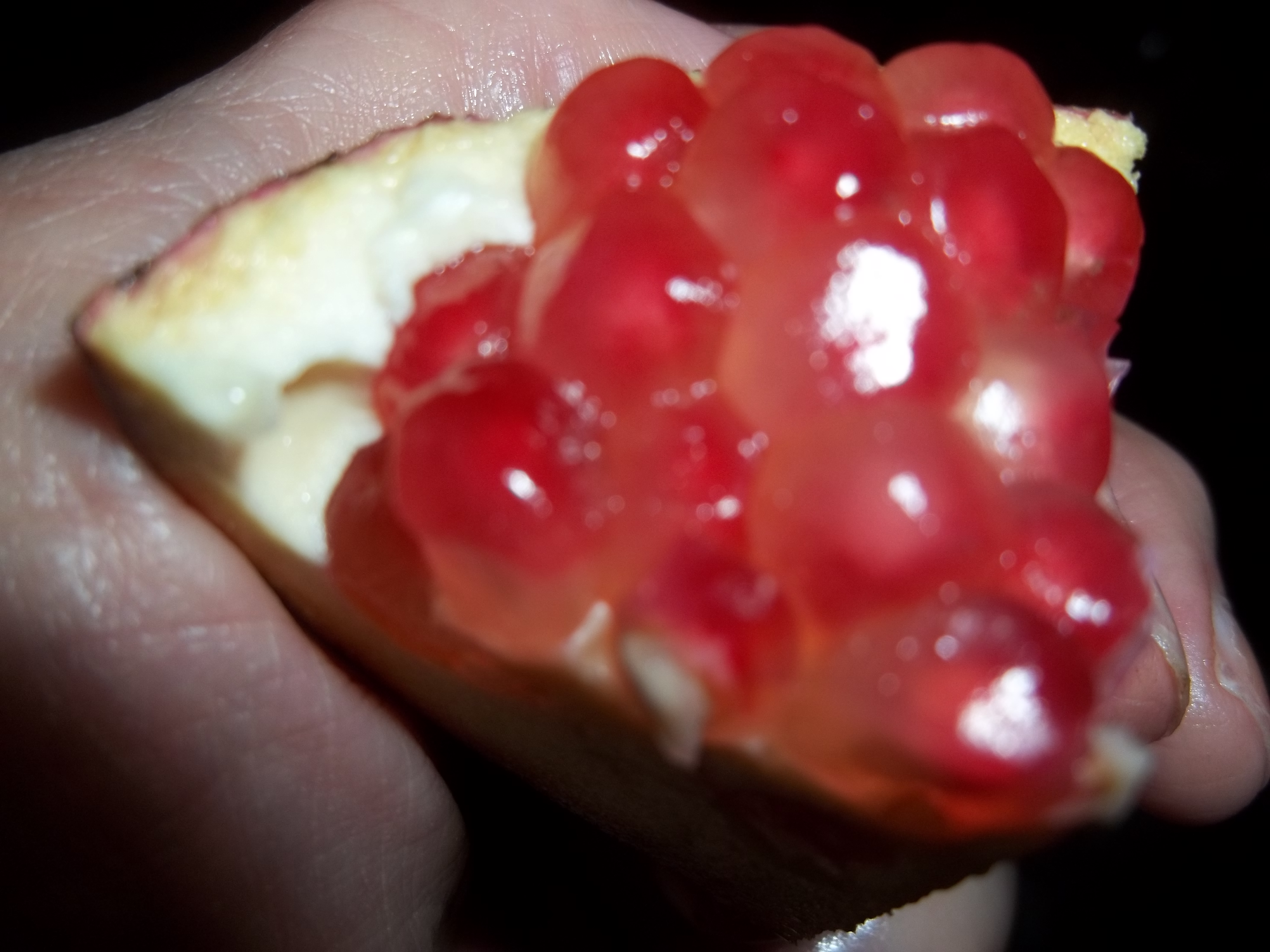
Our pomegranate harvest won’t win any beauty contests. Most of the smallish globes that make the thin tree branches droop down don’t look at all like those available in supermarkets. No luscious rounds of rouged skin here. I am not sure what it is, but some blight attacked the trees and left these dark freckles on the skin of all our fruit. But I learned a long time ago that it is not what’s on the outside that counts with pomegranates and people. I cut the tough skin, submerged the pieces in a bowl of water to break apart the arils inside, and look at the scarlet, glistening, juicy results!
 Now comes the reward! A handful of these seeds drips intense flavor and power packed nutrition! I love the sweet yet tart pop of juice each tiny aril provides. We like them for snacks, but I will also use them to top salads, make salad dressings, and squeeze some for juice to freeze.
My garden as always teaches me truth – take time to look beyond the exterior. Soon it will be time to harvest the Meyer lemons. I think their lesson is going to be “don’t give up!” It took a few years for this tree to have more than a few lemons but this year there are too many to count. Don’t worry, I have a list of “100 things to do with Meyer Lemons!”
 I will repeat myself: I love Magnolia trees. Just over a year ago, in May, 2011, I photographed Magnolia blooms from our tree, and posted them here with words about their beauty and my admiration of them.
We emphasize the fresh beauty of the flowers of so many plants in their seasonal displays of new life and color. Rightly so, for it is in the flowering that many growing things are the most lovely and appealing. We even use the term “gone to seed” to apply to things that are past this stage and are not well kept or have declined to become rundown and useless. Indeed, the annuals in our gardens will run their course, finish their blooming, and wither with the first frost to die, be uprooted by the gardener, and replaced with new, young plants come Spring.
But oh my, what we miss if we enjoy only the blooming of the Magnolia.
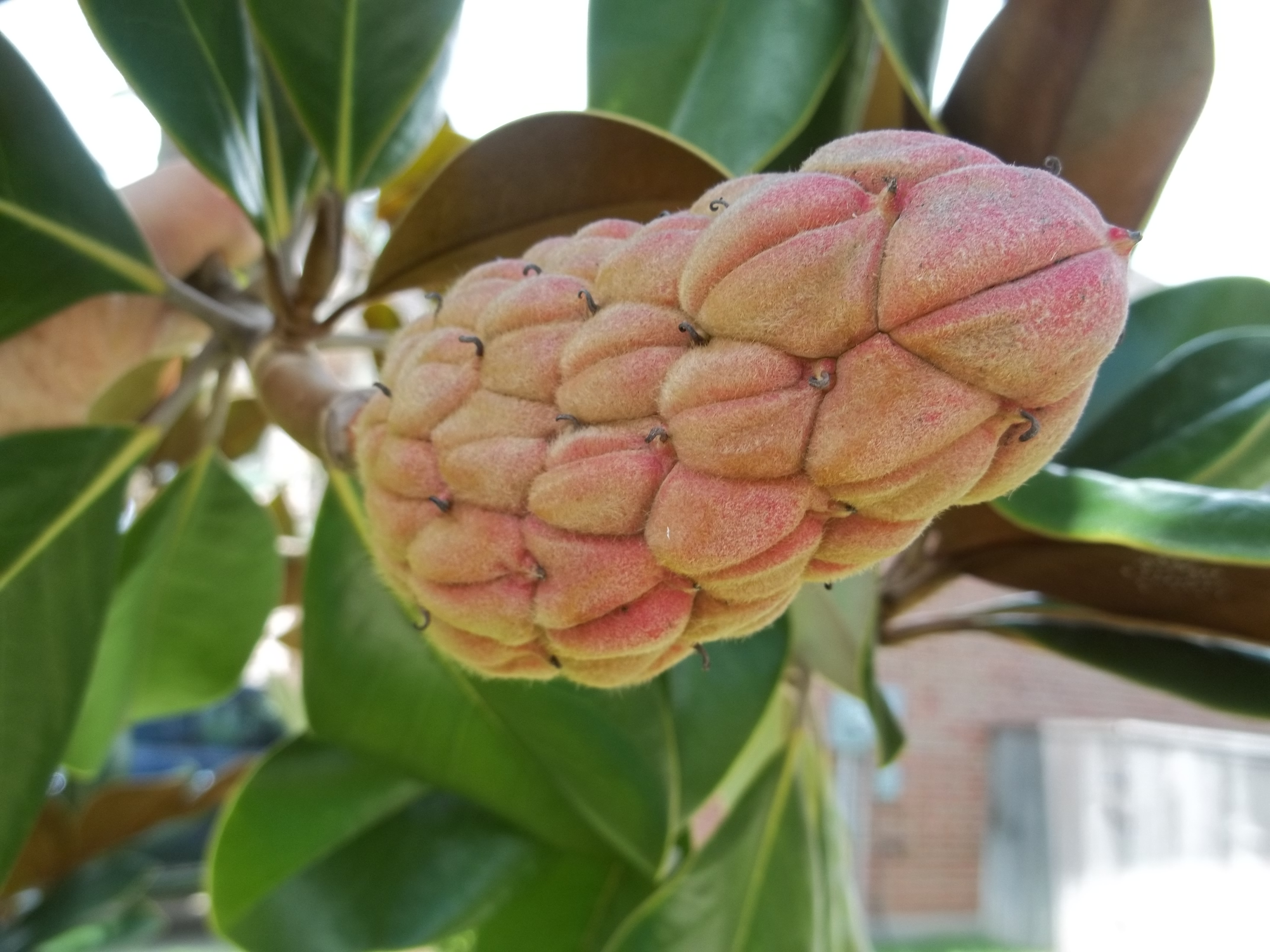 Once the creamy flower petals have become leathery and caramelized, they fall off, leaving a center cone that swells with seed. Early on, it resembles some exotic fruit, a blushing tufted pillow covered with velvet.
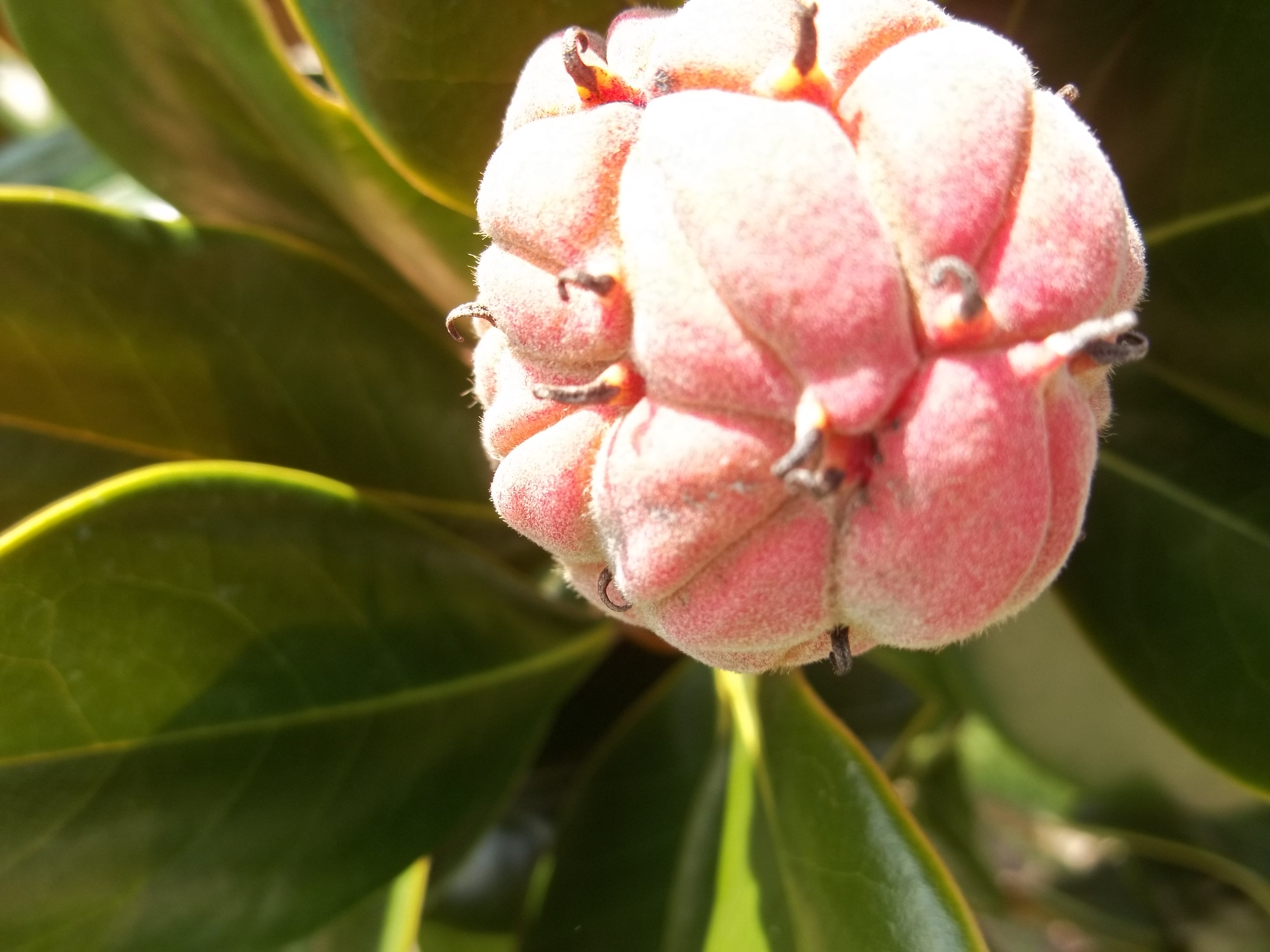 Left on the tree, the tufted pods begin to burst, revealing treasure inside: shiny scarlet seeds holding on with a single silken thread.
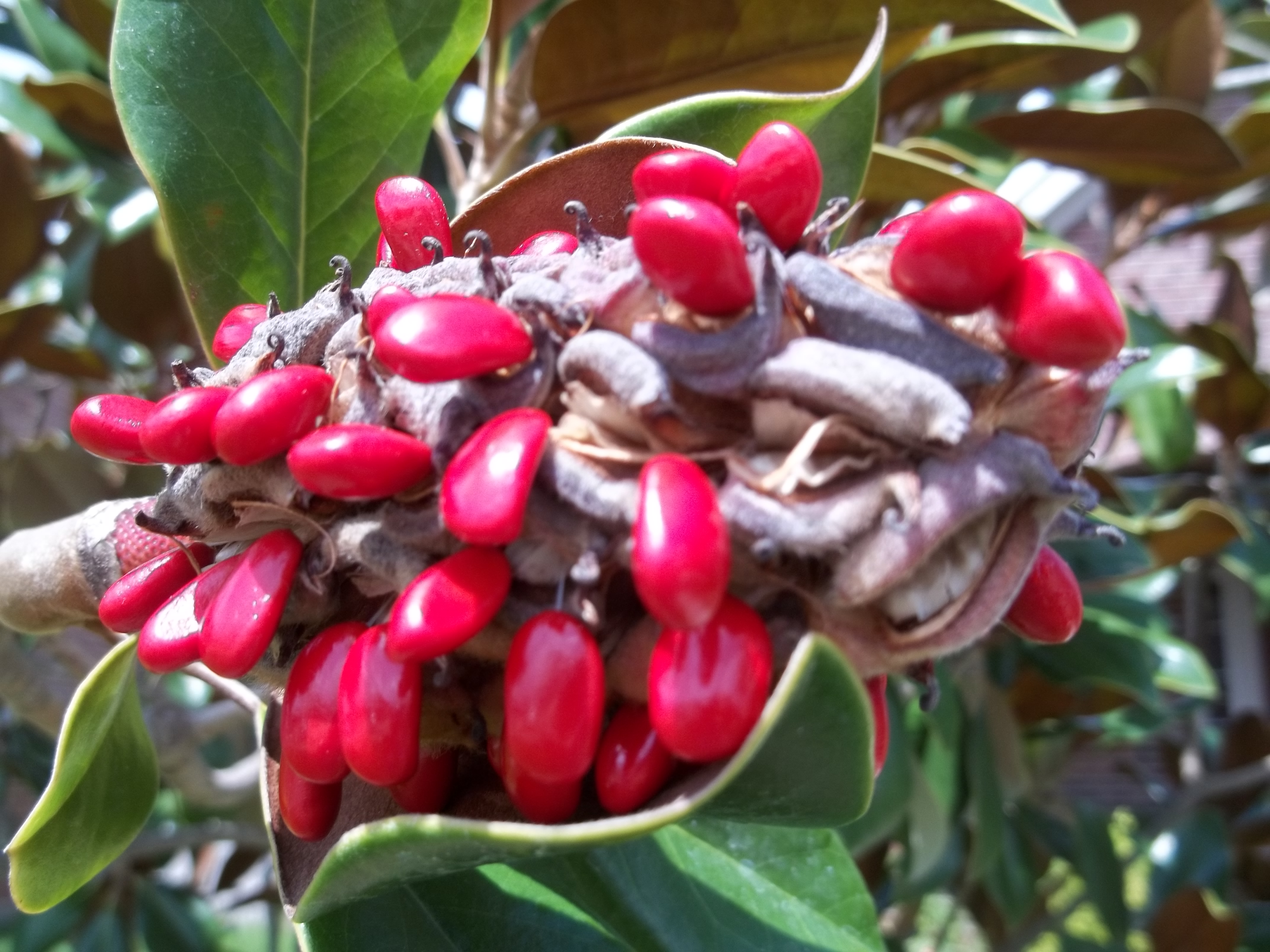 Songbirds love these seeds. Coveted by those who craft holiday wreaths and decorations, the vivid cones and seeds often get harvested by eager hands. If left alone, the seeds turn black and fall to the ground. I think I love Magnolias even better after the bloom.
 When I visited one of the garden centers in Houston recently, this sign caught my eye since I had just written the previous post about fragrance. Many of the plants in our back yard garden could be labeled “featuring fragrance.” A plant that is new to me is actually a very old-fashioned one. Sweet almond verbena reaches out to my nose with its sweet smell and a hint of vanilla. It is no surprise to find that this reminds me to pray with each breath, inhaling God’s goodness and peace and letting out all my fretting. Remembering the Biblical references to our prayers as a fragrant incense, I smiled when I read that another name for this plant is Incense Bush. Breathe!
 Stones and Feathers