
clusters of jade tiles
circle wide from center
spreading shade for fish beneath
mosaic circles of respite
hiding place

clusters of jade tiles
circle wide from center
spreading shade for fish beneath
mosaic circles of respite
hiding place

“Wisdom begins in wonder.” ~Socrates

Anyone who has been around small children knows how often we hear the question “Why?” I have been asking that question about my fig harvest this year. We have a fine fig tree in the garden that typically has so many green figs it is hard to keep up with the harvest as they ripen. This year we had an unusually wet June and although there were hundreds of green figs and they began to ripen early, harvest slowed and stopped completely in the second week. Our brutal Texas heat came on suddenly. My research tells me the tree went into conservation mode and began aborting its fruit. Even though we watered heavily, nothing brought back the production so the hard little green figs began to drop to the ground, wasted and of no use to anyone. Not even the birds would eat them.
The problem is that figs are shallow rooted and easily stressed. That reminded me of my own need for being rooted deeply to be able to take the heat and avoid reacting in damaging ways to the stress of our uncertain times!
” May your roots go down deep into the soil of God’s marvelous love;” Ephesians 3: 17, The Living Bible

Among the herbs in my garden, purple cone-flower, or Echinacea, stands out because of its flowering in our summer heat. It is not just a pretty bloom that looks like a purple daisy. Used for hundreds of years for its medicinal benefits, it could tell so many stories. The large center cones are actually seed heads. I am thinking of how many new plants can grow from only these three.
flower on in summer’s heat
build your mountain of seeds
to let them go
and begin another story
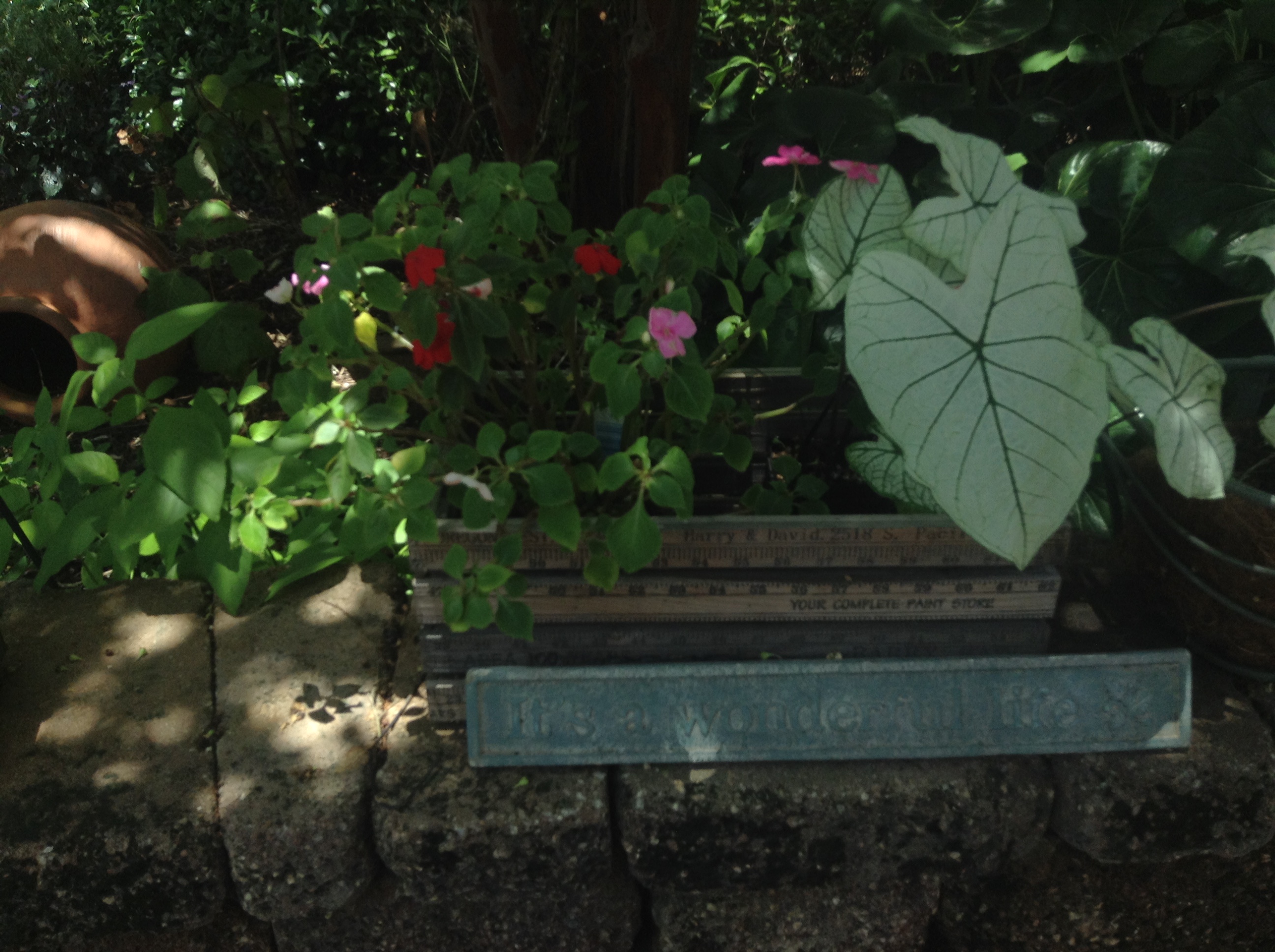 This box of impatiens and Caladium on the wall at the edge of the back porch reminds me how much nourishing water it requires in our summer heat. Without this shade and daily watering, the blooms stop, the stalks wilt and leaves begin to curl. The container, made of measuring sticks, and the fading sign speak of need, too. Yes, it is a wonderful life, as long as I am refilled with wonder. Wonder. Full.

How quickly our front porch nest scene moved from the wrens’ nest building to those beautiful little spotted eggs to incubation and hatching. Hatchling to nestling to fledgling bird, now this one last photo captured the moment before down wisps waved in the wind and became flight feathering. The next time I saw the nest the tiny beaked face lifted above the little scraps of wings, tumbled over the edge and in one scurry disappeared into my Katy Ruellia at the porch edge. Now I only see a still, silent nest although I hear wren song in the trees.
No empty nest pathos
Is that a triumphant note I hear?
On to living and singing
Until nest time next year?
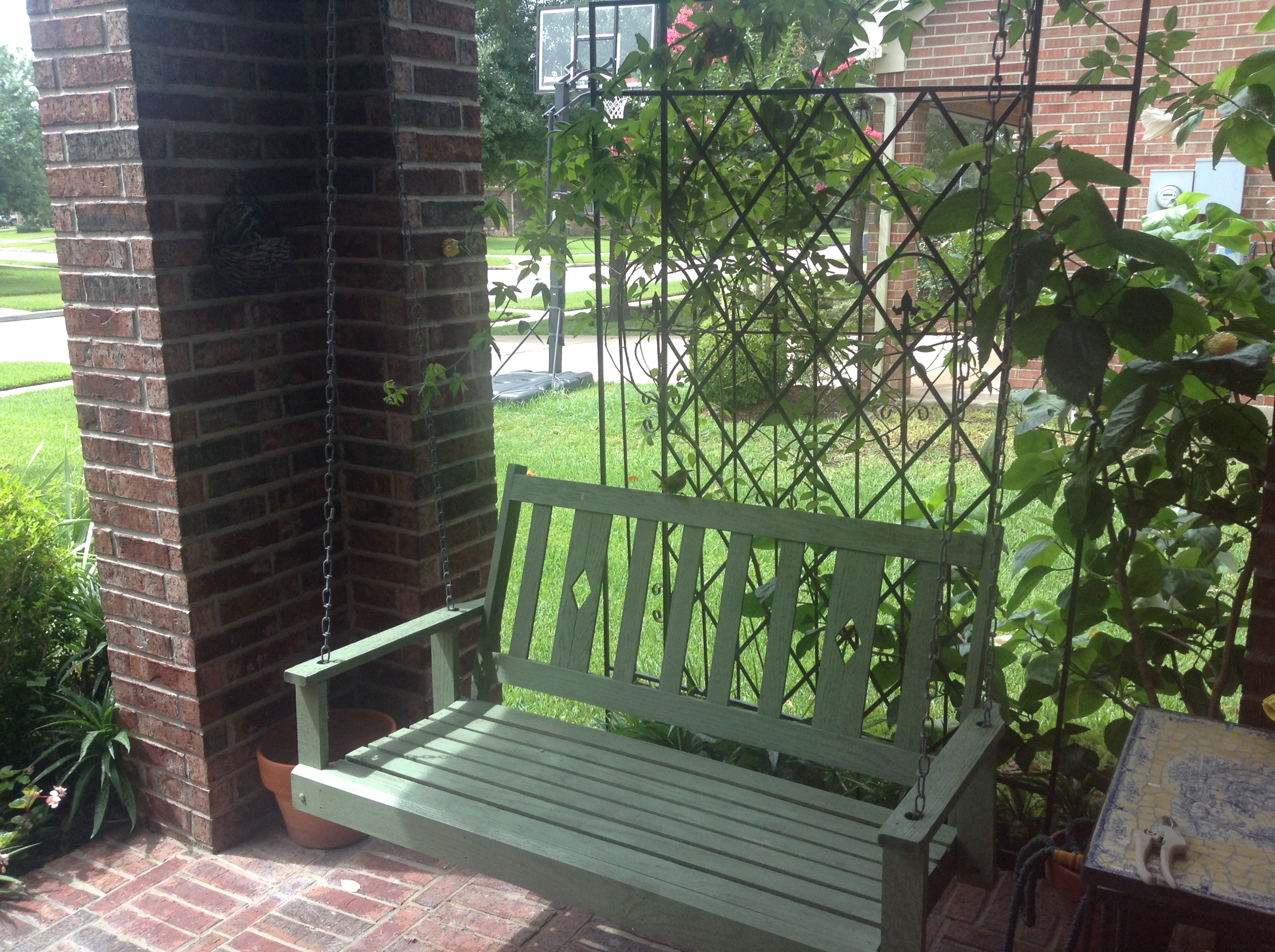
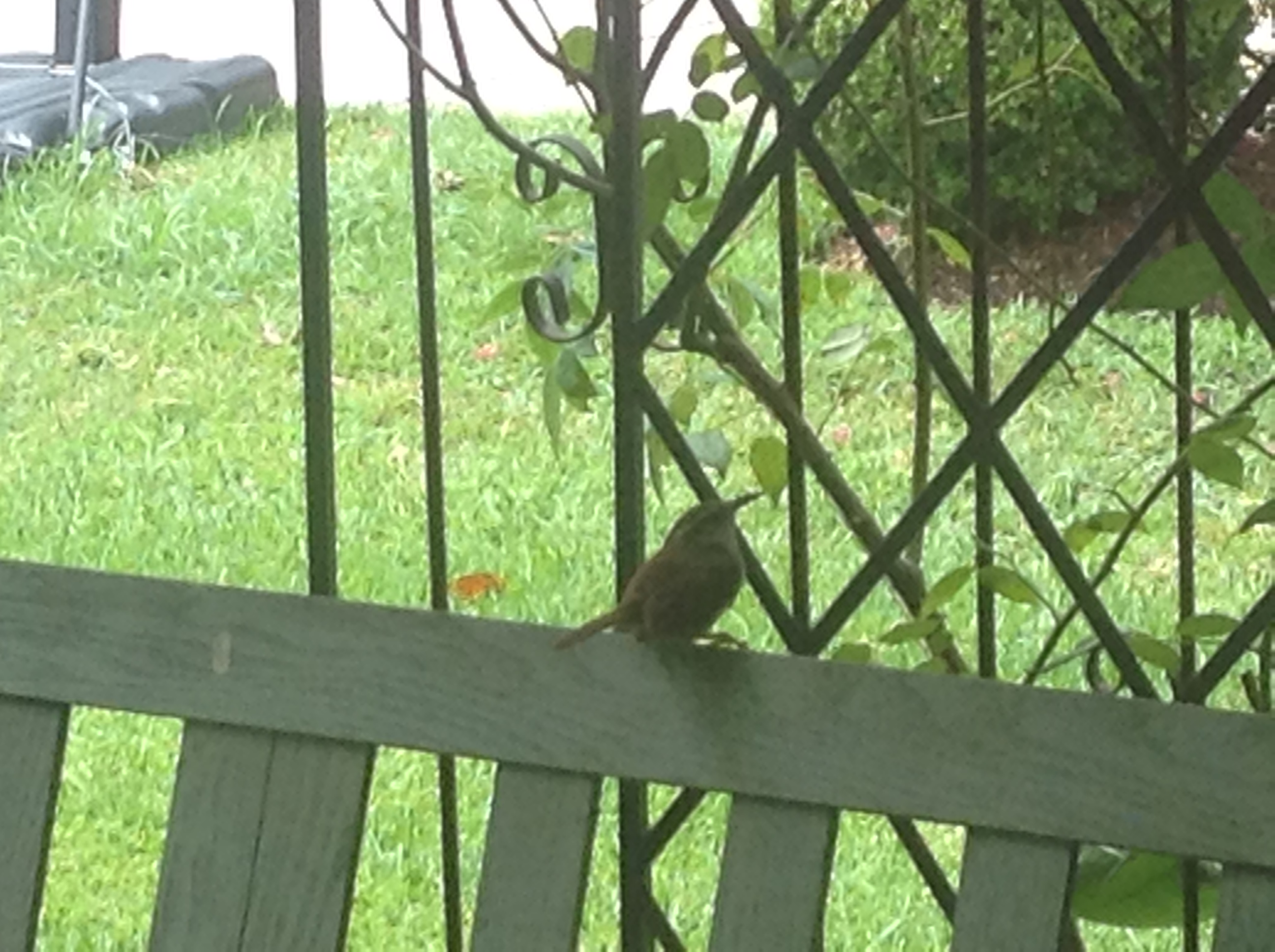
Words in these lines from William Henry Channing create a leit motif as we slow down into the pace and space of summer. The song of this tiny feathered friend perched on the back of our porch swing calls me to stop and look and listen. And sing.
listen to stars and birds and babies and wisdom
open my heart
think quietly
talk gently
hurry never
let the holy grow up through the common
sing
“To live content with small means; to seek elegance rather than luxury, and refinement rather than fashion; to be worthy, not respectable, and wealthy, not, rich; to listen to stars and birds, babes and sages, with open heart; to study hard; to think quietly, act frankly, talk gently, await occasions, hurry never; in a word, to let the spiritual, unbidden and unconscious, grow up through the common — this is my symphony.”
William Henry Channing
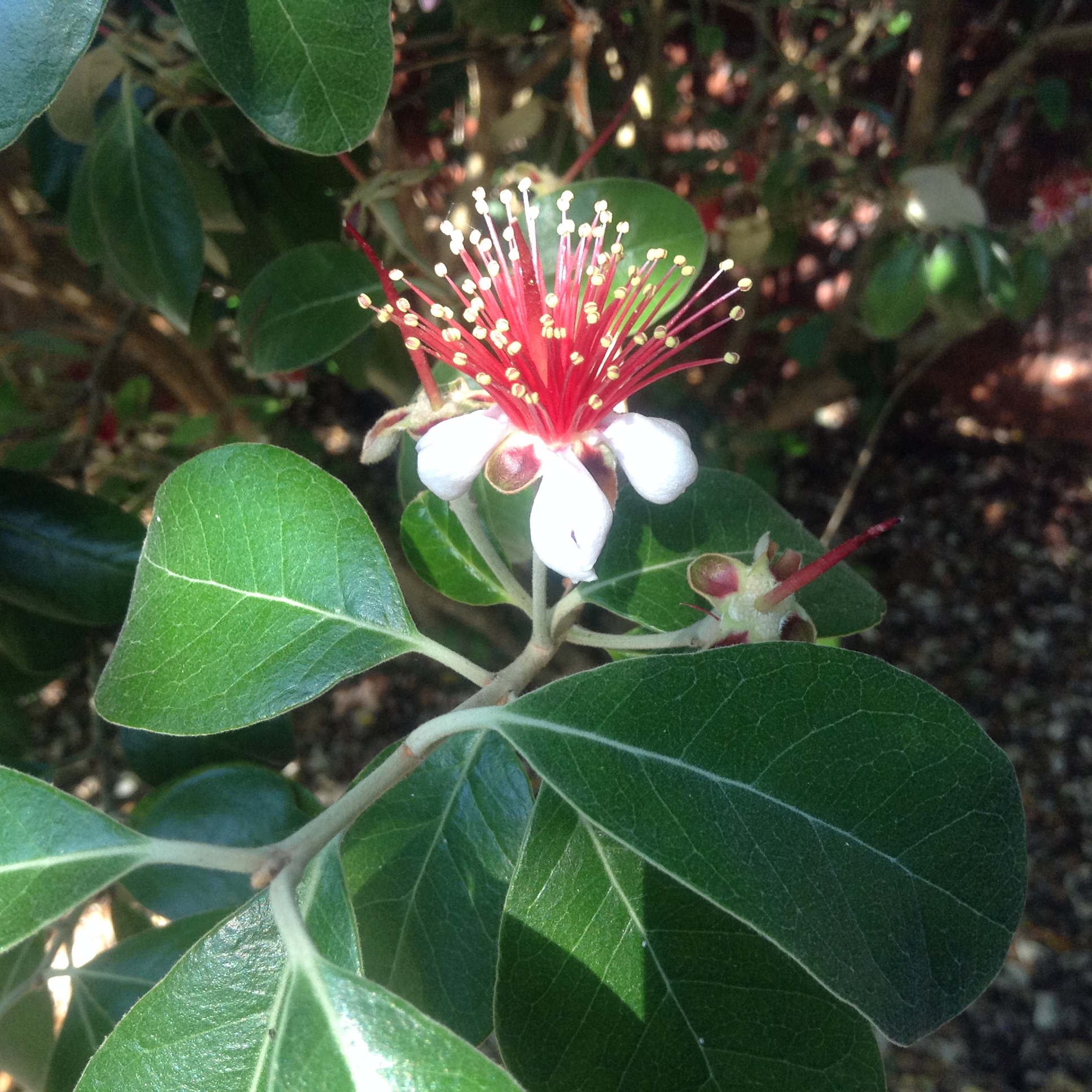 The tree in the back corner of our garden is not noticed by most people who walk around out there. It is easy to pay attention to the roses, admire the lilies and tomato plants that have clusters of tomatoes almost ready to pick. The fig tree has grown huge and is heavy with green knobs easy to recognize as figs. But this little corner tree is not remarkable. It is only medium height with foliage that does not look too different from other plants. It grows happily in this spot with very little care. But once a year, the pineapple guava blooms and if you look closely, each bloom is a dazzling display of fireworks. The creamy white petals look like they are waiting to catch the sparks. Because they are tiny, even these exquisite blooms are not easily noticed. Even the fruit, which does not ripen until late fall, is easy to miss.
It has been a long tine since I quoted my favorite lines from one of Mary Oliver’s poem, but I am thinking of her words today – “Pay attention. Be astonished. Tell about it.”
There is so much beauty that we miss when we fail to do just that.
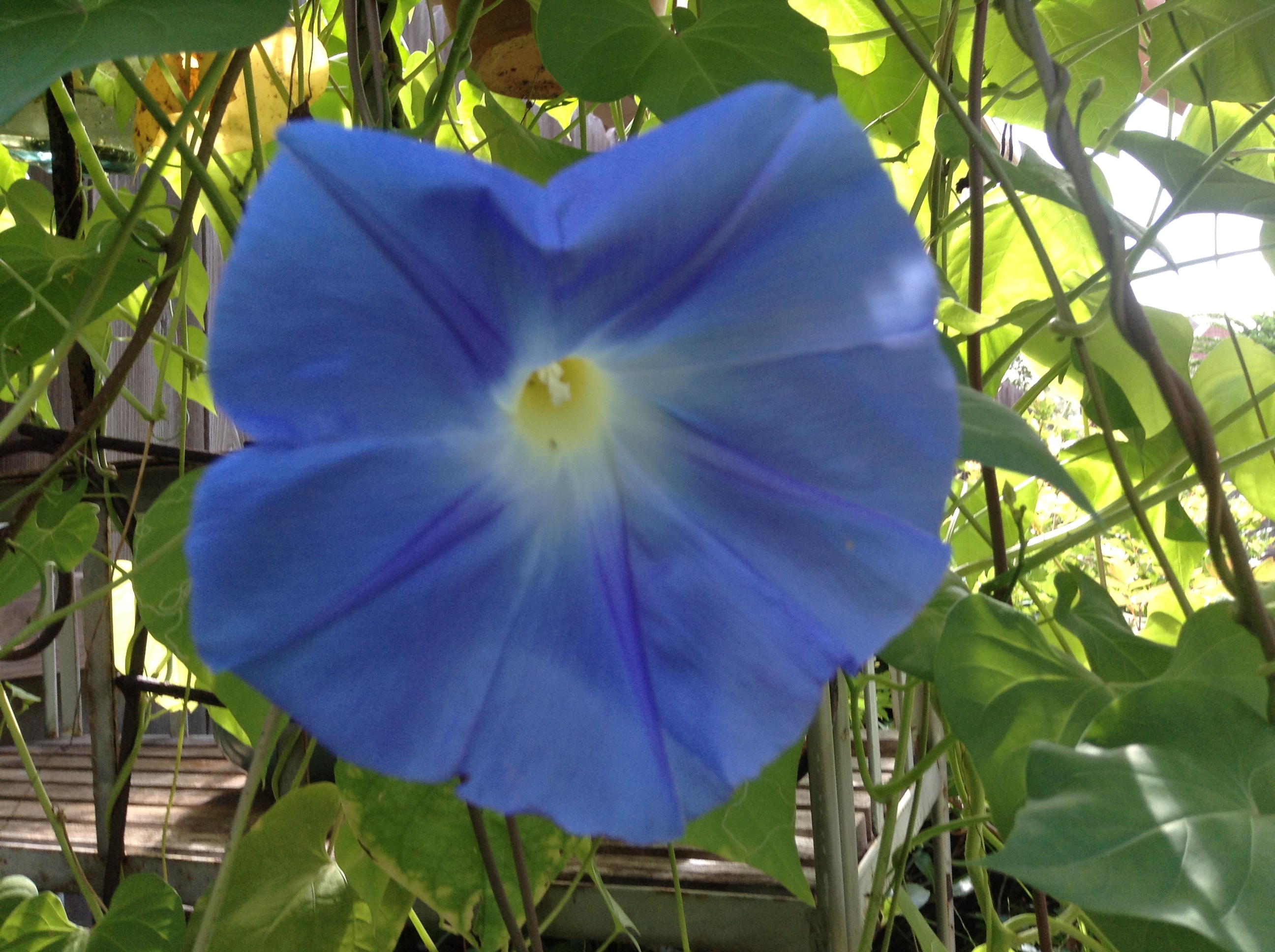
 sprouting takes time
cracking the hard black seed shell
pushing through into darkness
reaching for light
then warmed in sunlight, kissed by rain
the green in me reaches up
for strength to lean into
wrapping around and holding on
I grow and bloom

one shimmering moment
of gold dusted magic
glittering brightly
beckoning awe
transforming an ordinary begonia
and me
 Stones and Feathers