
“We have no choice. God is with us.” Karl Rahner
These lights string out behind us as we remember Christmases past – all reminding us of the Light that has come, the Light we have received. And I ask, “How will I reflect his LIght?”

“We have no choice. God is with us.” Karl Rahner
These lights string out behind us as we remember Christmases past – all reminding us of the Light that has come, the Light we have received. And I ask, “How will I reflect his LIght?”

One of the ways our family walks the Advent path is with an Advent calendar. This is not like a desk calendar with pages. We have a number of different ways of counting the days. One of the first we used when our boys were very small was by reading a story from a Little Golden Book every night. The book came with its own cardboard triptych, a fold out replica of Bethlehem, with shuttered windows that could be opened to reveal a symbol inside. Our children loved opening the tiny windows and first listening, then reading the part of the story the symbol represented. One of our sons and his wife gave us one that is a box, a stack of small drawers that can be opened each day.
Today is the 4th day of Advent, and this is the Advent “keeper” or calendar I used this morning during my quiet time. It is a little A frame shape box with hinged sides that fold shut and latch. There are tiny hooks for small figures to attach representing a different character in the nativity story for each day. When I look at these 4 figures, it seems they are all shepherds, young shepherd girls and boys. As I scattered the remaining figures, thinking of the days ahead, I thought how these had lives that were tremendously interrupted by the story of Christ’s coming – the shepherds, most certainly Mary and Joseph, and even the animals who shared their stall (there are cows and sheep to hang on hooks, too) – all were divinely interrupted and all had lives were changed forever in ways they previously could never have imagined..I wonder if I am open to such interruption, to being unsettled.. Dietrich Bonhoeffer said “We must be ready to allow ourselves to be interrupted by God.” I
“Lord, the calendar calls for Christmas. We have traveled this way before.During this Advent season we would see what we have never seen before, accept what we have refused to think, and hear what we understand. Be with us in our goings that we may meet you in your coming…” ~ The Unsettling Season, by Donald J. Shelby
 My young granddaughters and I made this painting project together last week. As I laid out cardboard under a blank canvas and handed out a tube of paint and paintbrushes, 6-year-old Jordann said she didn’t want black, that she likes different colors. I explained our first step was to paint the white canvas completely black. As I spoke, I was reminded of the words of an artist who painted many sunlit landscapes and night scenes where light shone from windows. He said that he must paint the darkness first in order for light to glow in the way that made him famous.
So they painted all black and waited as paint dried. Later I painted words and added tiny lights. Everyone loves this simple illustration of a favorite Christmas song. I love, too, that it illustrates hope – the coming of light to darkness, the very image of Advent.
“The people who walked in darkness have seen a great light; Those who dwelt in the land of the shadow of death, upon them a light has shined.” Isaiah 9:2
” …this is indeed a season of lights shining in darkness- candles in windows, colored lights on nighttime trees, a lantern glow in a stable, a star shining high in the heavens. Help me follow the light of these images to the unquenchable ligt of Your real presence.” ~ in Christ the Light of the World by Thomas Kinkade, Anne Christian Buchanan, and Debra K. Klingsporn

sitting in early morning darkness
waiting for slivers of dawn
I light one candle,
dispelling this room’s darkness
sunday morning in church
one purple candle will flicker
all signs of beginning
the ancient Advent story
of dark need
of light coming
again
 Our entire Satsuma harvest – but the tree is very small.
As we move toward the end of November, our garden is a reminder of things that can be counted on: Gulf Coast Muhly fronds mound up like pink froth. Satsumas are ready for harvest, Meyer lemons are hanging ready on the tree, the last of our okra and tender herbs fade as the first frost comes. Marigolds, chrysanthemums and calendula bloom gold and copper. Thanksgiving is less than a week away. We will gather friends and family and favorite foods at full tables.
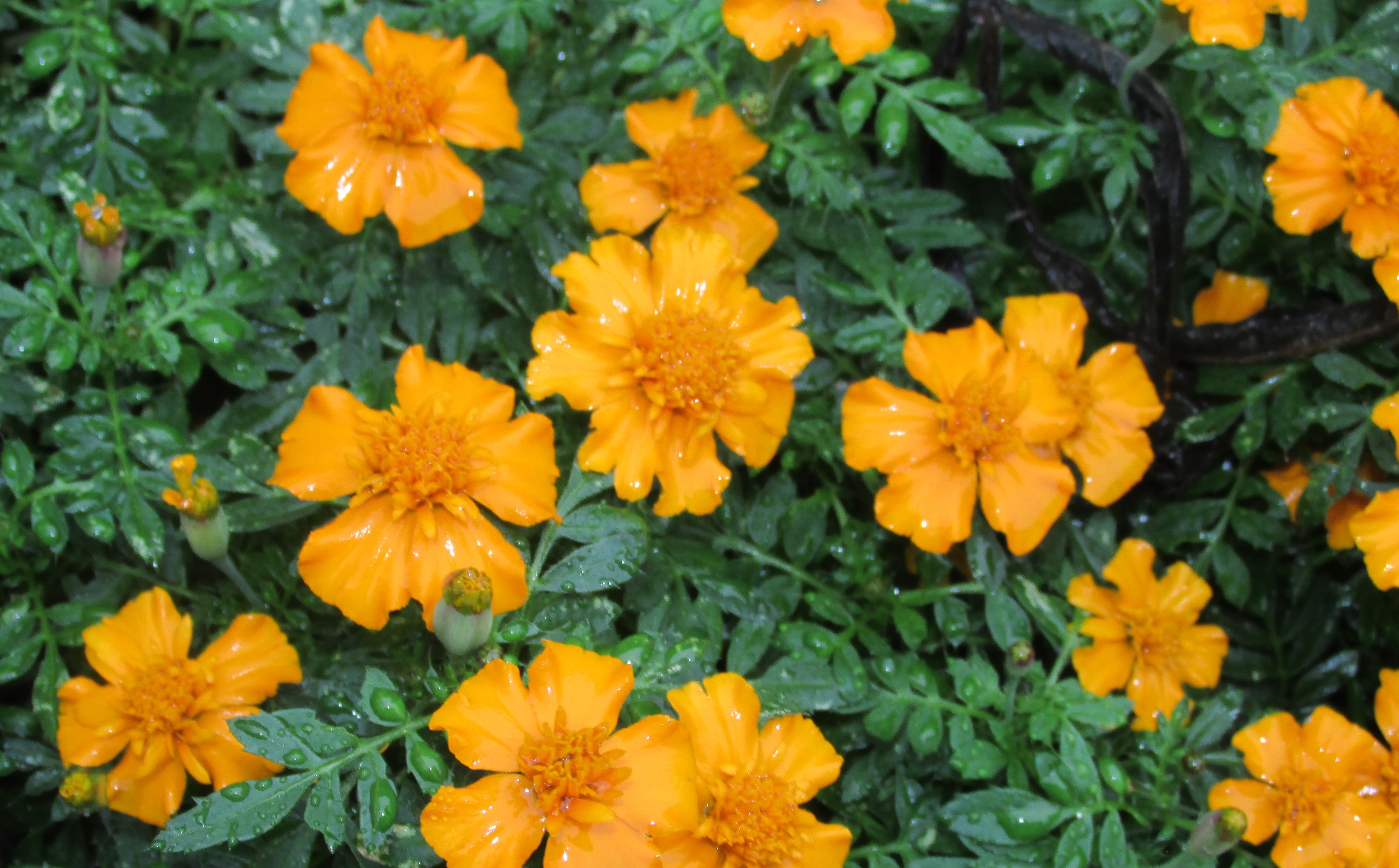
Marigolds
I am remembering childhood meals around my Terrell grandparent’s table in Smith County, Texas. There were hearty breakfasts with farm fresh eggs, sausage, biscuits and gravy, dinners (at lunchtime) that often included peas and tomatoes from their garden and an iron skillet of cornbread cut into wedges.There were suppers, often the same food reheated or a bowl of soup, and Sunday dinners after church. There were holiday meals at Easter, Thanksgiving, and Christmas where the table and kitchen were both filled with chicken and dressing or a ham, plus those garden fresh vegetables which had been put up into canning jars. To follow, there would be an assortment of sweets – cookies, sweet potato, pecan, and mince pies, and often a pound cake. The food and occasion might vary, but there was always the same beginning: This, too, was something I could count on. Papa Terrell would say grace. Today we may say a blessing or give thanks, but he always said grace. The words were always the same, and rattled off so quickly I could never understand them. But his posture spoke to my heart with no need for words. Over 70 years later, now I see him clearly in my mind: gray head bent forward and bowed in humility.
“We offer grace at table as a form of waiting with confidence…reciting such a prayer is sometimes referred to as a way of preparing to receive all that has been granted to us. We offer grace in amazement that even the good things we have rejected are being offered again. And then we eat, and the food meets an earthly need of our souls, and we are made whole.” – Cynthia Rigby, W.C. Brown Professor of Theology, Austin Presbyterian Theological Seminary*
For me, the calendar days designated to Thanksgiving are a wonderful approach to beginning of Advent exactly because of this waiting with confidence…preparing to receive all that has been granted to us. Our family will gather once again around the old oak table, the very same one that Grandma loaded with food and where Papa said grace.
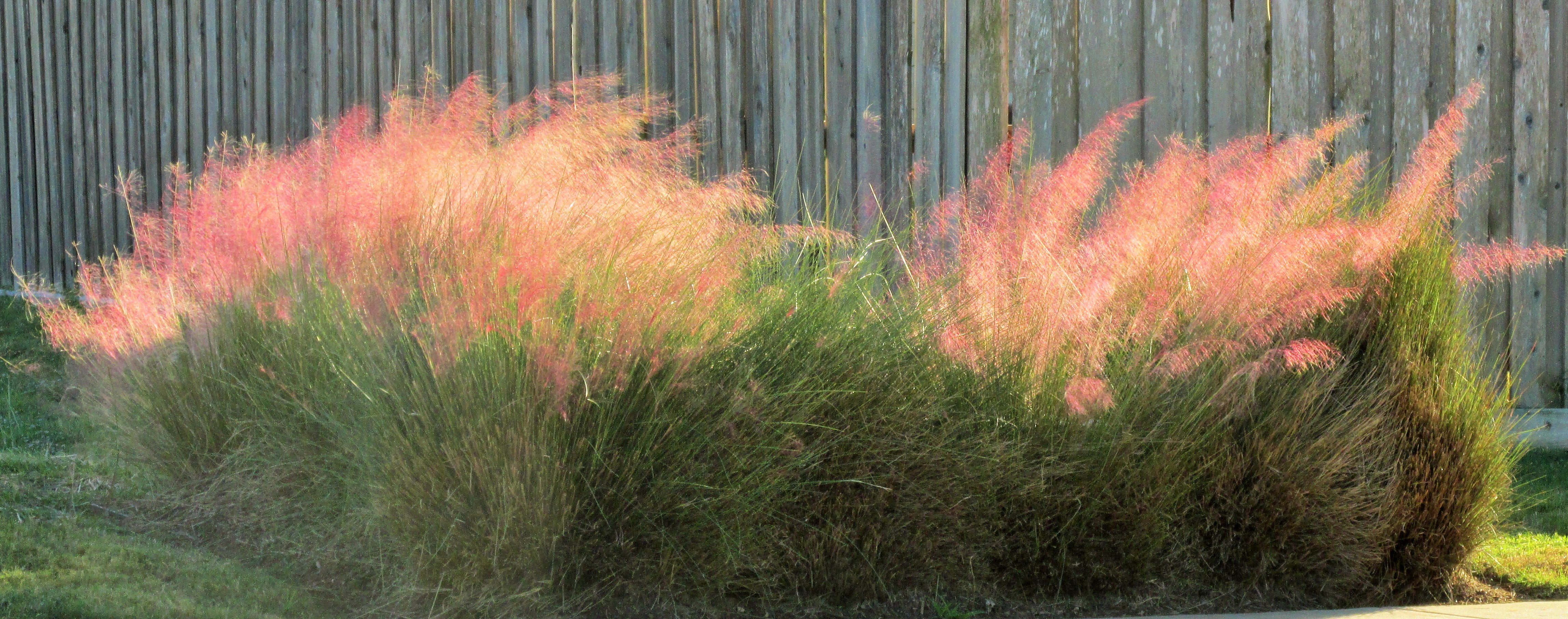
Pink Gulf Coast Muhly, a coastal grass
*as quoted by Wayne Slater in DallasNews, a Texas Faith Blog
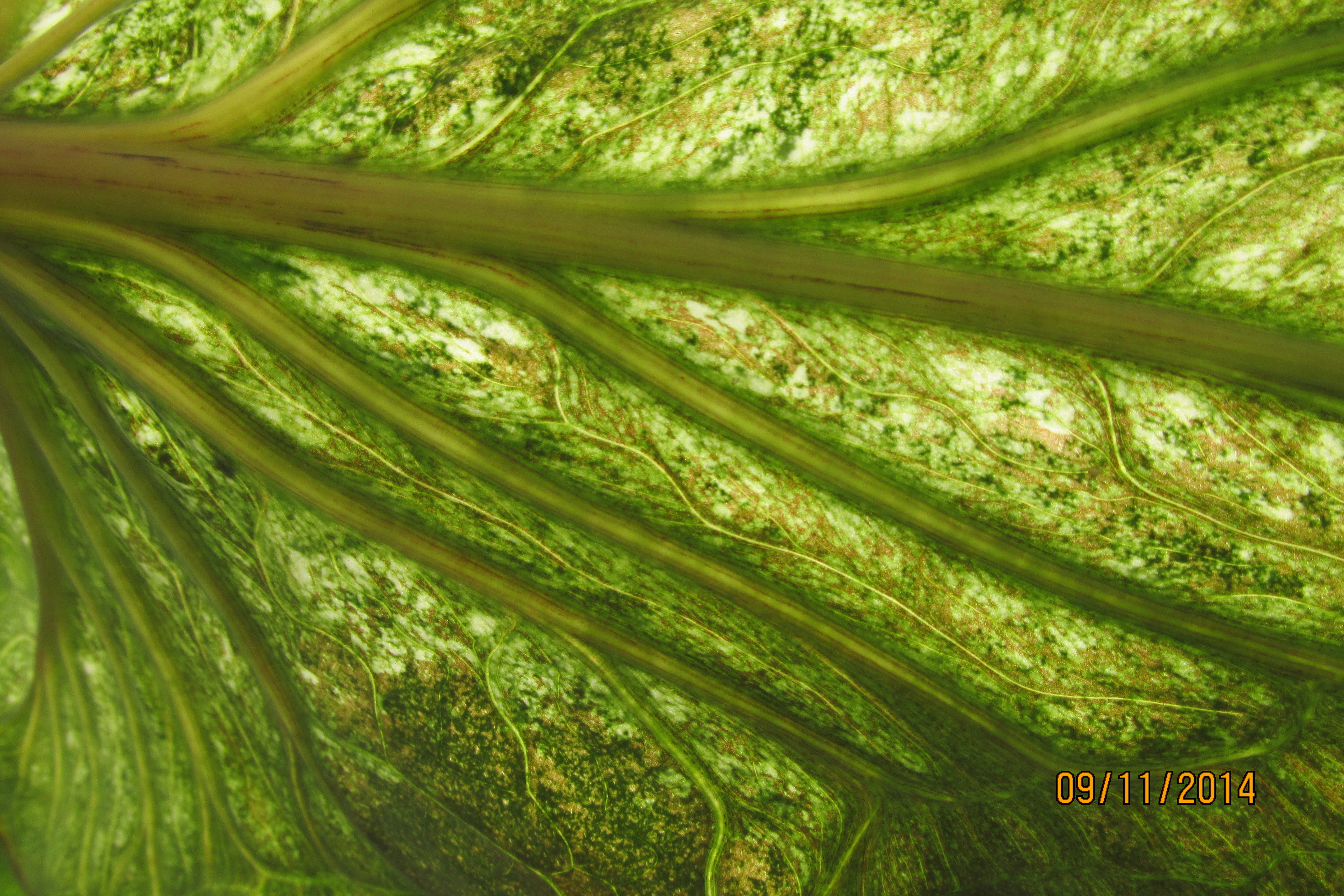
Underneath a caladium leaf in morning light

Standing in front of the same caladium leaf in the same light.
― C.S. Lewis, The Magician’s Nephew
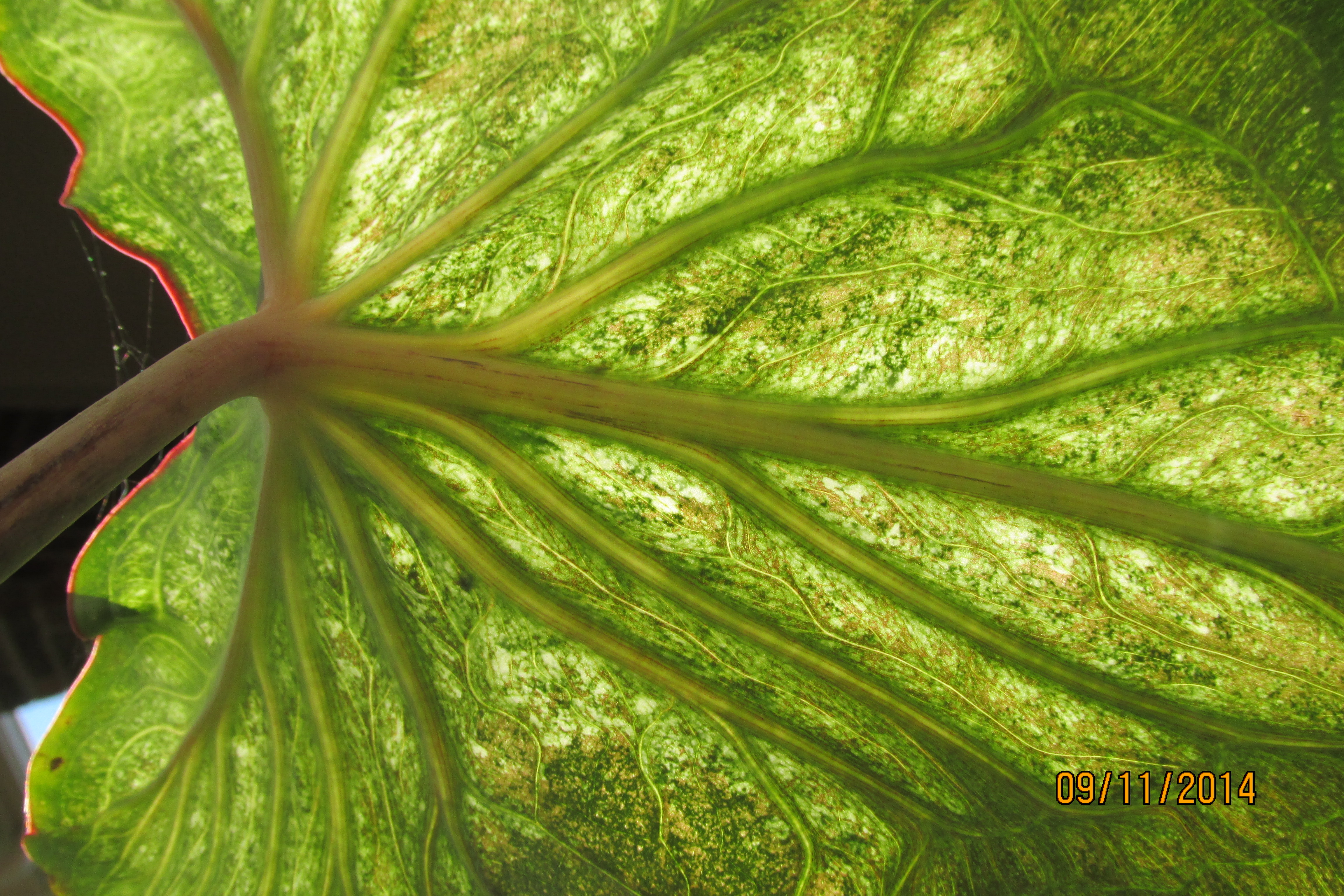

The pot of caladiums on my front porch continues to multiply and thrive in our cool mornings and sunny afternoons. Every time I come in that door I pause to to appreciate the soft colors and hint of scarlet at the center and edge of the leaves. They are pretty. But this morning when I opened the front door to go outside, I looked from a different place and what I saw took my breath away. Veined and shaded, the leaf’s translucency drew me closer. Morning light streamed through emerald tissue and glowed like stained glass. In this moment,, in just this angle of sunlight, there was beauty I would have missed if had hurried by. I believe we have countless opportunities like this to see with the eyes of our heart. I am grateful for this one.

I have never been fond of palm trees in my garden landscape. To me, as close as we live to the coast, they seem much more at home near the ocean, fitting right in with the sand and sun and waves. However, I adore ferns, and grow several different varieties in our wooded back yard. But as you see here, there is definitely a friendly relationship between these ferns and the large palm where they so happily grow. I noticed this cluster of ferns when I took my 6 month old granddaughter out in her stroller for a walk one morning. This palm is the centerpiece of a small pocket park in their neighborhood. I don’t think I had ever truly paid attention (sorry, Mary Oliver!) and been astonished at the sight, and certainly had never talked about how these graceful little ferns happen to find enough to grow on in what seems to be just a notch left by palm fronds as they age and break off.
In this case, the palm’s growth habit (aging?) creates a little pocket where debris and leaves collect. The point where the palm fronds once attached to the trunk – called boots – collect leaf litter that composts to create a growing medium that ferns love. This is a natural occurrence in areas like ours where wet, humid conditions favor the ferns.
The ferns are epiphytes. This means they are growing on another plant that serves as a host, but they don’t get their nutrition directly from the host plant or cause any it any harm. Spanish moss is another common epiphyte.
Another little fern called the Resurrection Fern can be found growing on a palm trunk, although the most common choice for this fern around here are the large old live oaks where the fern grows along the branches looking like brown moss until it begins to rain. Then it transforms into emerald lace! (See my previous post http://tinyurl.com/TheOldOakTree)
I am glad I paid attention to these feathery green surprises. One day tiny spores were floating around and a puff of wind carried them to just the right spot to root and grow. I am reminded of the lovely phrase used by Hildegarde of Bingen: A Feather on the Breath of God. Maybe we can learn to let go enough to be shown just the right place to grow. And it just might be an unlikely place, an extraordinary place, one we would never have known to dream of.
“Pay attention
Be Astonished
Tell about it.” ~ Mary Oliver


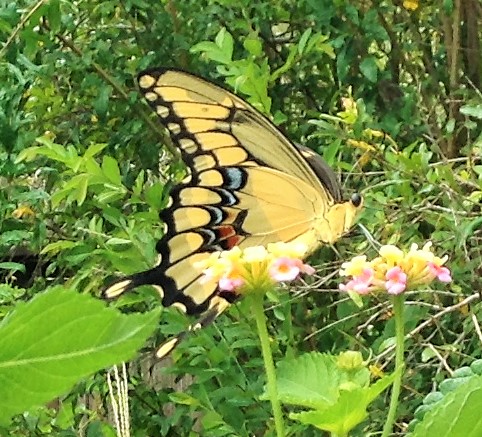
Milkweed and Lantana in our garden have continued to thrive and bloom in our South Texas heat. I am grateful for the splashes of color from their small flowers. But I am more grateful that they provide nectar for these giant swallowtail butterflies. I understand that this butterfly will feed only from these plants, and afterward will find my Meyer lemon tree where they will lay their eggs. These, of course hatch into caterpillars with voracious appetites for citrus leaves, and then form their chrysalis where they become these lovely winged creatures. The cycle never ceases to amaze me. I am blessed by this beauty.
Without stretching the comparison too far, I consider how, given the choices I have for the care and feeding of my soul, I choose that which nourishes me in the best ways for growing and changing. I want to be more intentional in my choices of entertainment, the books I read,the art and music I enjoy, the thoughts with which I fill my mind.


this difficult thing that has come
as yet unnamed
stumbling block or stepping stone?
obstacle or opportunity?
barricade or bridge?
praying to see and to hear
the answer comes clear
choose
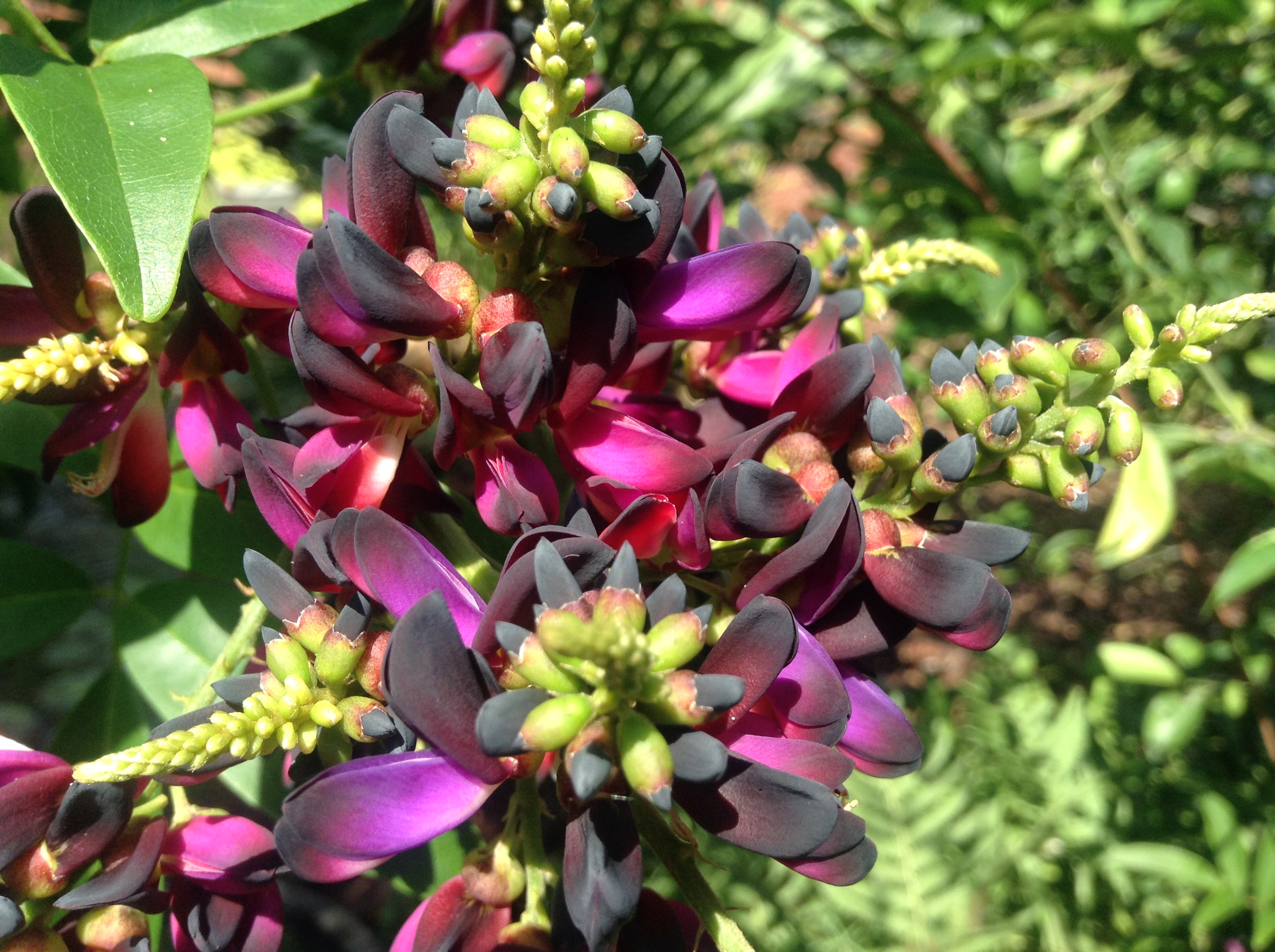
In the area of East Texas where I grew up, lavish blooms of a vigorous climbing vine grew not only in back yards and trailing over porches, but also in the woods, where it draped over tree branches, adding clouds of light purple clusters of fragrant flower clusters to the late Spring landscapes. When I go back there even now I watch for the extravagant (if invasive) Wisteria that is loved by many.
A number of years ago I began to admire another vine that grows in our part of Southeast Texas that is also called Wisteria. It is named Evergreen Wisteria because of its hardiness and its ability to bloom summer through fall. Its smaller clusters of deep, rich purple make it a spectacular garden plant.For support, ours shares a small gazebo with a Peggy Martin rose. As much as I like these lovely purple blossoms, I recently learned something about the plant that makes me admire it even more. It doesn’t just soak up soil nutrients and water – it gives back!
This vine is not in the same family as our Wisteria in the woods, which some call Chinese Wisteria. This plant is a legume, and much like other legumes, evergreen wisteria fixes nitrogen in the soil, which enhances the amount of nitrogen available for other plants growing nearby, It is a good companion plant for others which are heavy nitrogen feeders.
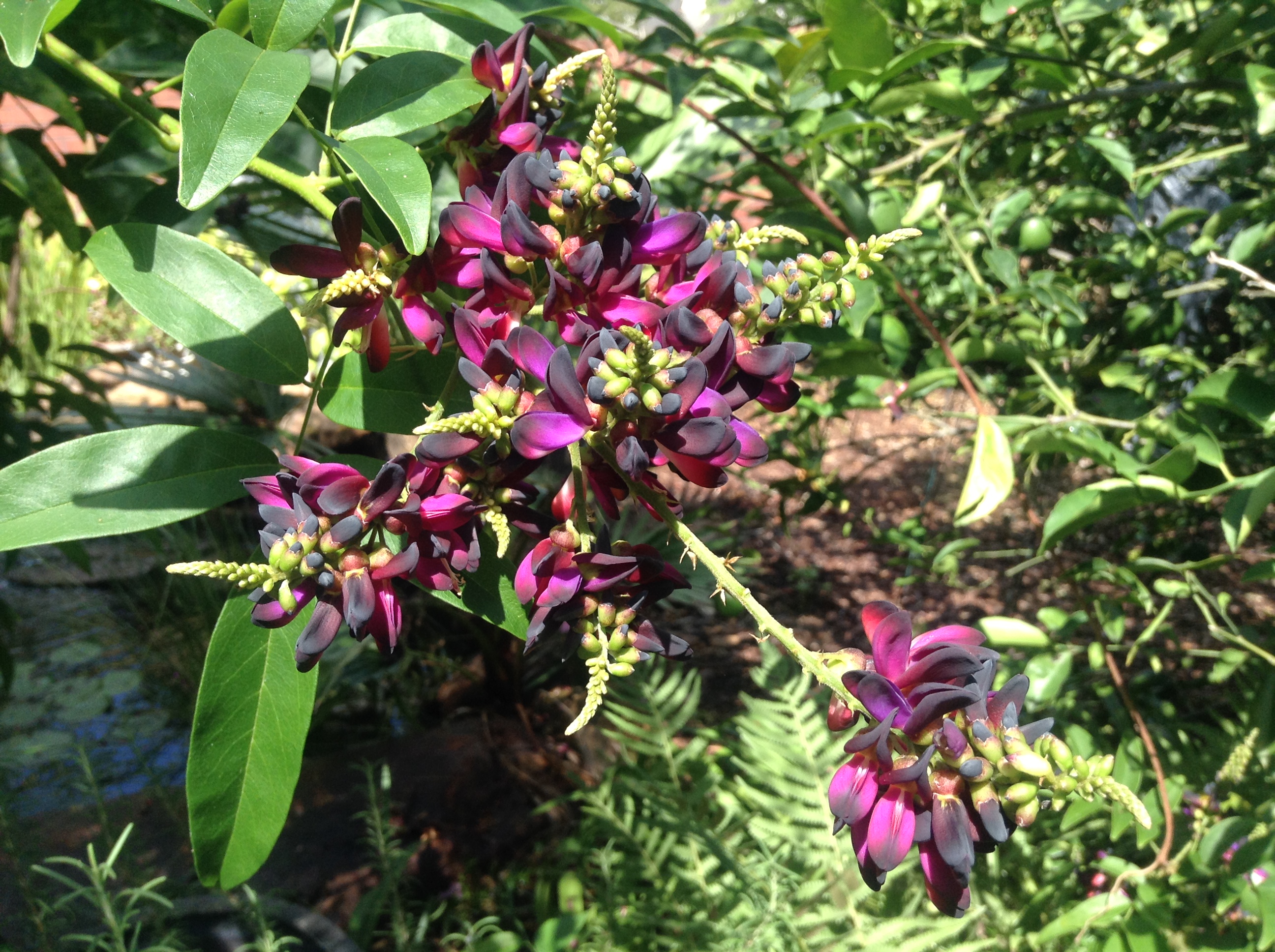 Along with the many other lessons learned in the garden, my lovely Evergreen Wisteria reminds me of the value in perserverance, the joy of sharing beauty, the need for being trained on a Trellis that does not fail, and – that as I have been given, so I must give so that those who share my garden space can thrive.
“Beauty, youth, and strength are flowers, but fading seen.
Duty, faith, and love are roots and evergreen,”
~fom the Old Knight,by George Peele
 Stones and Feathers