After the Bloom

I will repeat myself:  I love Magnolia trees. Just over a year ago, in May, 2011, I photographed Magnolia blooms from our tree, and posted them here with words about their beauty and my admiration of them.

We emphasize the fresh beauty of the flowers of so many plants in their seasonal displays of new life and color.  Rightly so, for it is in the flowering that many growing things are the most lovely and appealing.  We even use the term “gone to seed” to apply to things that are past this stage and  are not well kept or have declined to become rundown and useless. Indeed, the annuals in our gardens will run their course, finish their blooming, and wither with the first frost to die, be uprooted by the gardener, and replaced with new, young plants come Spring.

But oh my, what we miss if we enjoy only the blooming of the Magnolia.
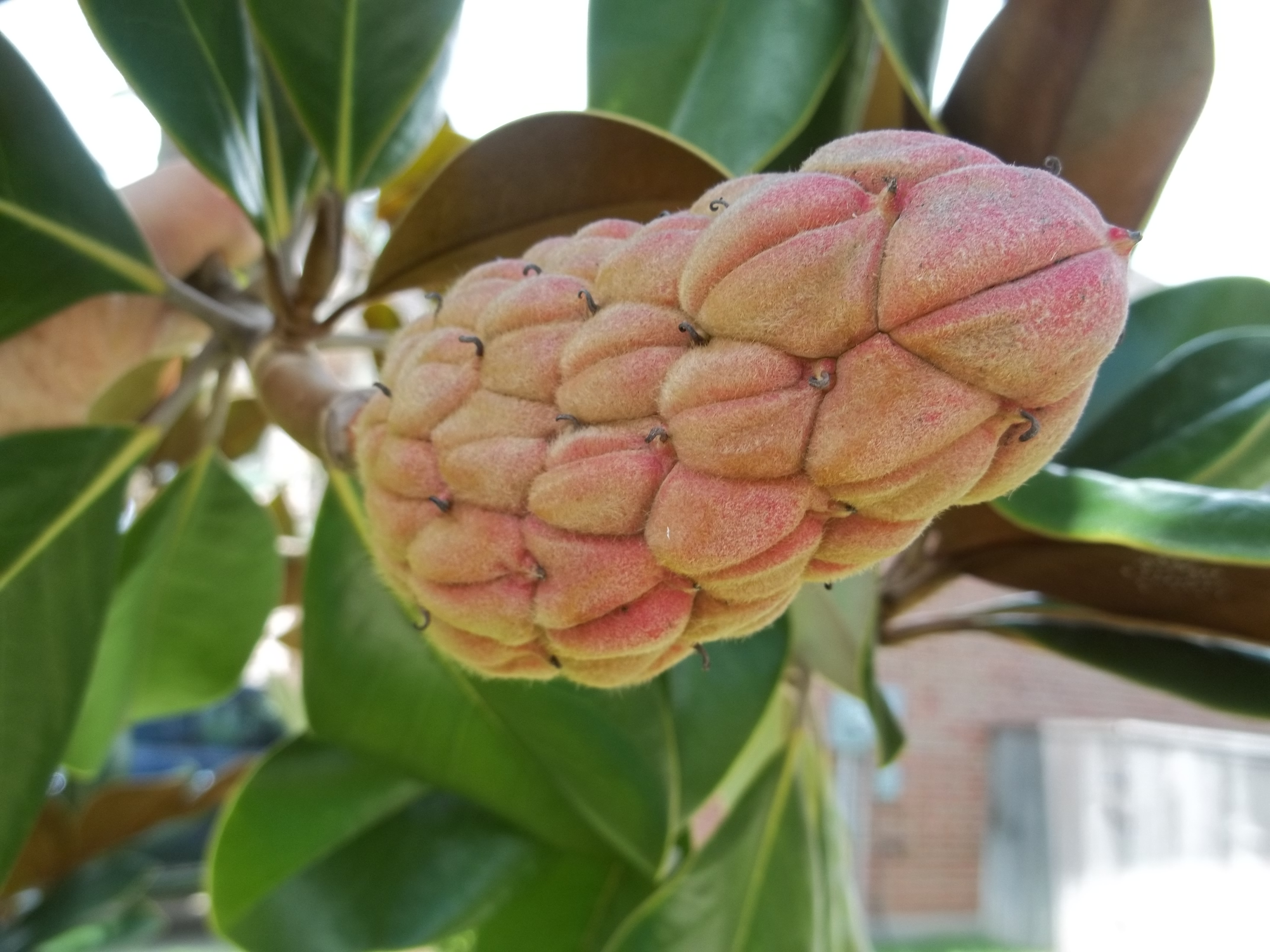
Once the creamy flower petals have become leathery and caramelized, they fall off, leaving a center cone that swells with seed. Early on, it resembles some exotic fruit, a blushing tufted pillow covered with velvet.
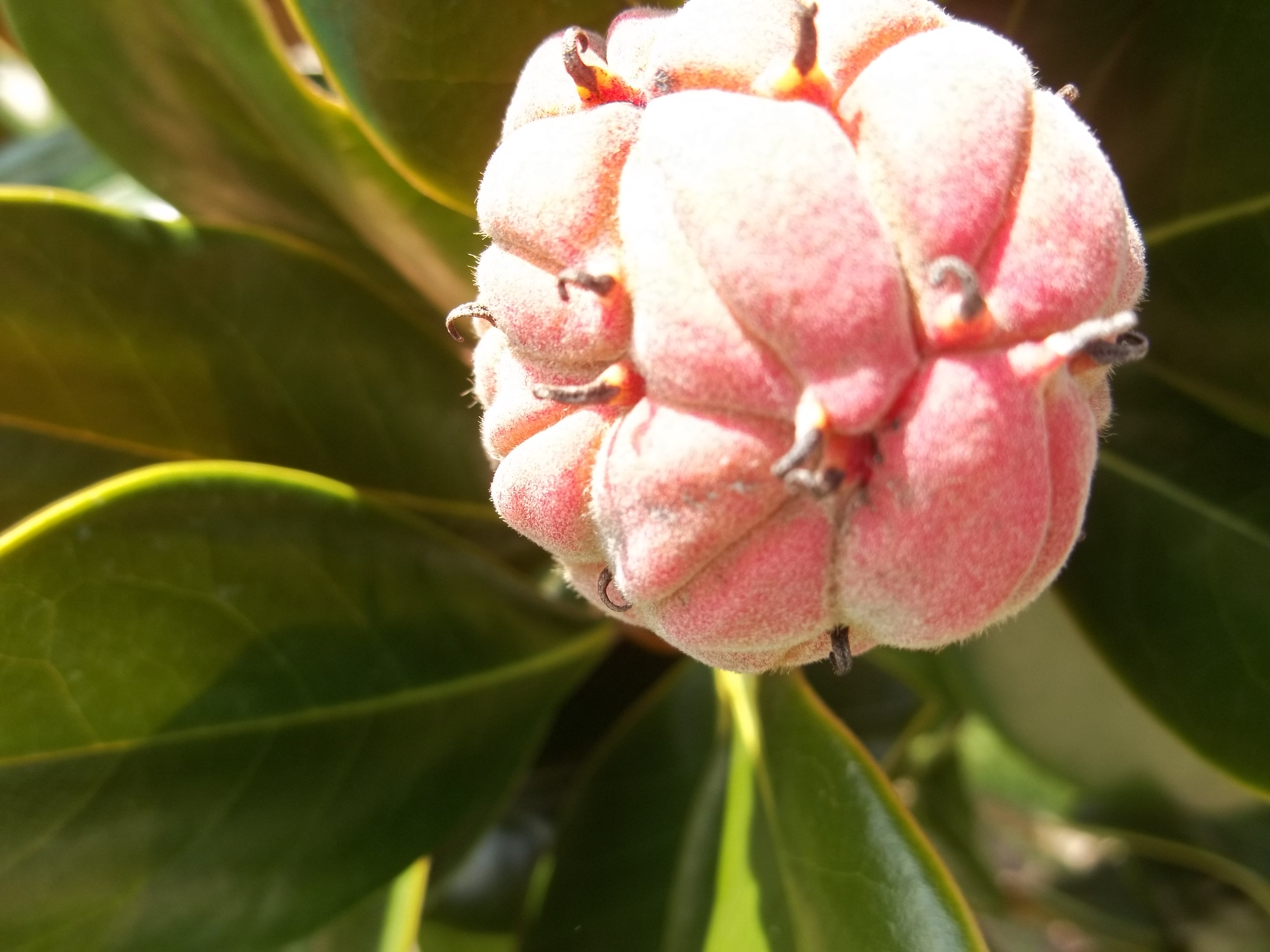
Left on the tree, the tufted pods begin to burst, revealing treasure inside: shiny scarlet seeds holding on with a single silken thread.
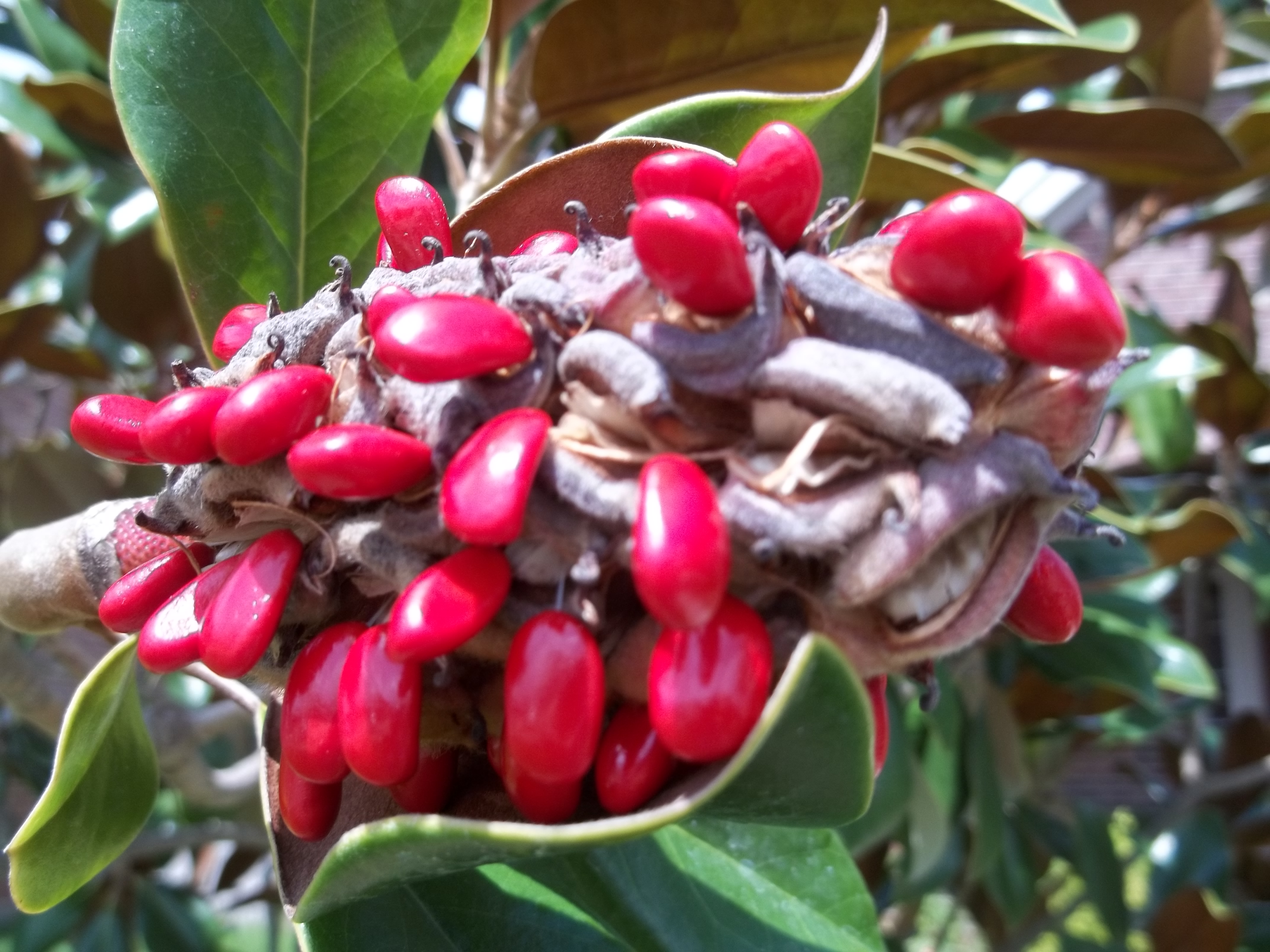
Songbirds love these seeds. Coveted by those who craft holiday wreaths and decorations, the vivid cones and seeds often get harvested by eager hands. If left alone, the seeds turn black and fall to the ground.  I think I love Magnolias even better after the bloom.
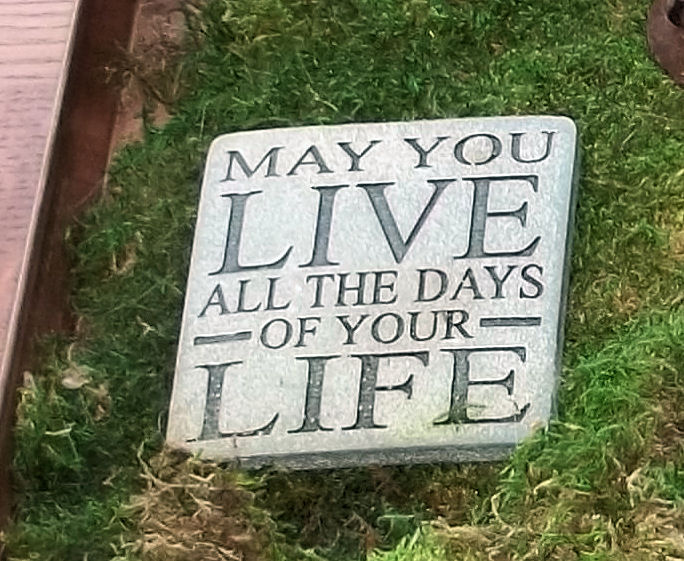
Interruptions?

“The great thing is, if one can, to stop regarding all the unpleasant things as interruptions in one’s “own” or “real” life. The truth is, of course, that what one regards as interruptions are precisely one’s life.”   ~C.S. Lewis

I am a list maker.  I make a list of at least 5 things I am grateful for every day. I keep a calendar where I list all commitments and appointments.  I make a menu list every week and grocery lists after that.  I have a list of things which must get done today, and a list of important matters which need to get addressed ASAP.  I have lists of projects I want to do someday and ones I intend to do this month or “for Christmas.”

I once kept a list (read journal) of meals I served for entertaining when we lived in Indonesia which included notes of foods which were favorites or those someone disliked.  As you see, some of these are lists for keeping and others which need to get checked off and discarded (replaced by new ones, of course.)

I have learned that lists get changed, rearranged, simplified.  I have learned, as C. S. Lewis says so well, that things happen which are not planned and are not on my list.

And I love that God, in His infinite grace and patience with me, has taught me that I don’t know all that I will face and need, and so to practice living with grace as the unexpected, and sometimes unwelcome parts of life occur. That (with the hymn “God of Grace and God of Glory” humming in my mind) I am given both the wisdom and courage for the living of this hour, which is precisely, my life.

I Know

“God is not a belief to which you give your assent. God becomes a reality whom you know intimately, meet everyday, one whose strength becomes your strength, whose love, your love. Live this life of the presence of God long enough and when someone asks you, “Do you believe there is a God?” you may find yourself answering, “No, I do not believe there is a God. I know there is a God.”              ~Ernest Boyer, Jr

                                                         Morning Glory

opening with abandon

act of eternal knowing

swirling indigo, unfolding star

royal blaze set by spark of morning light

act of eternal knowing

centered with ember of lingering moonlight

royal blaze set by spark of morning light

given with brilliant tenderness

centered with ember of lingering moonlight

indigo swirling, star unfolding

Gift of brilliant tenderness

opening with abandon

Pantoum ~ Mary Ann Parker   August 22, 2012

Attentiveness

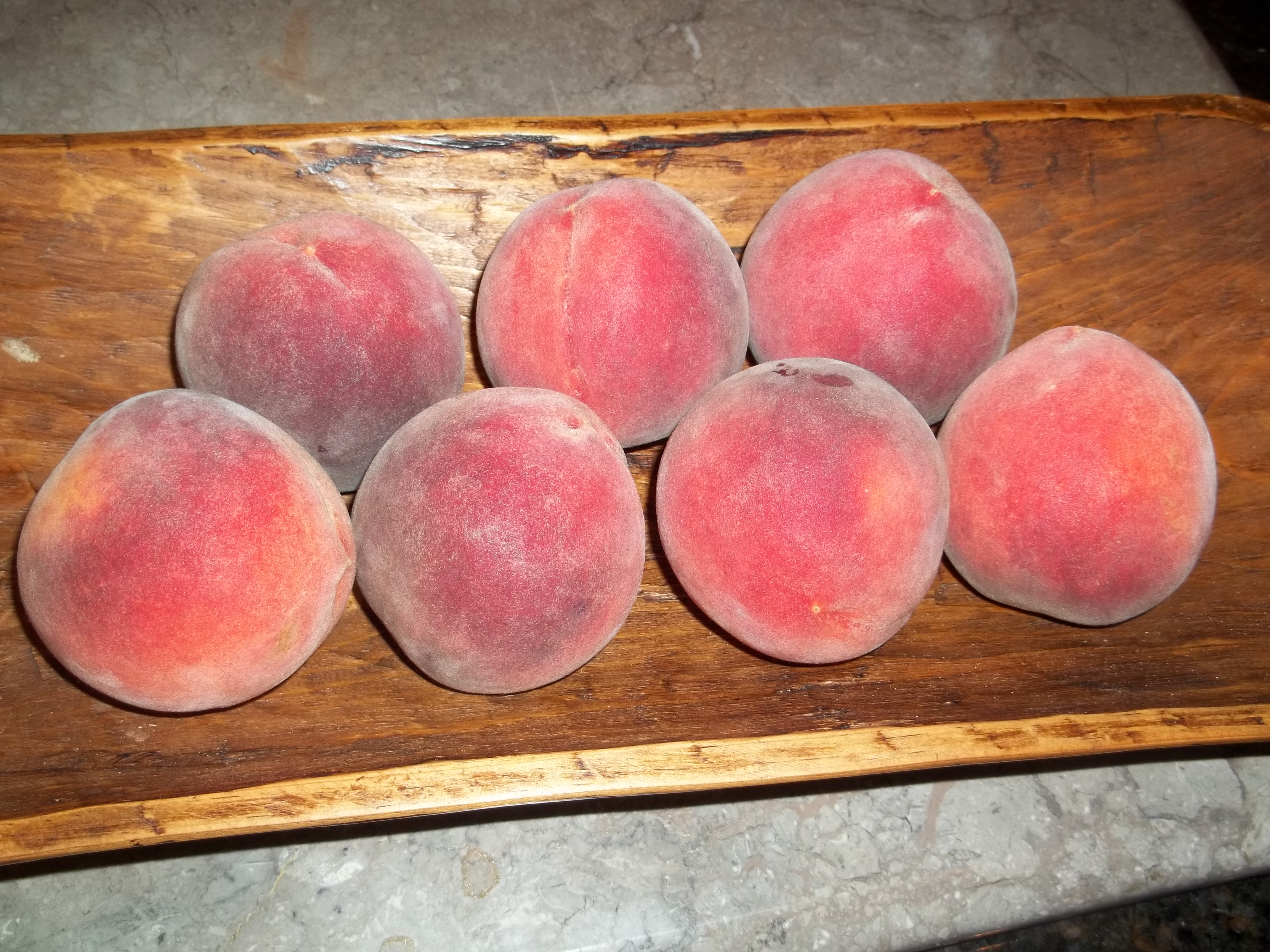
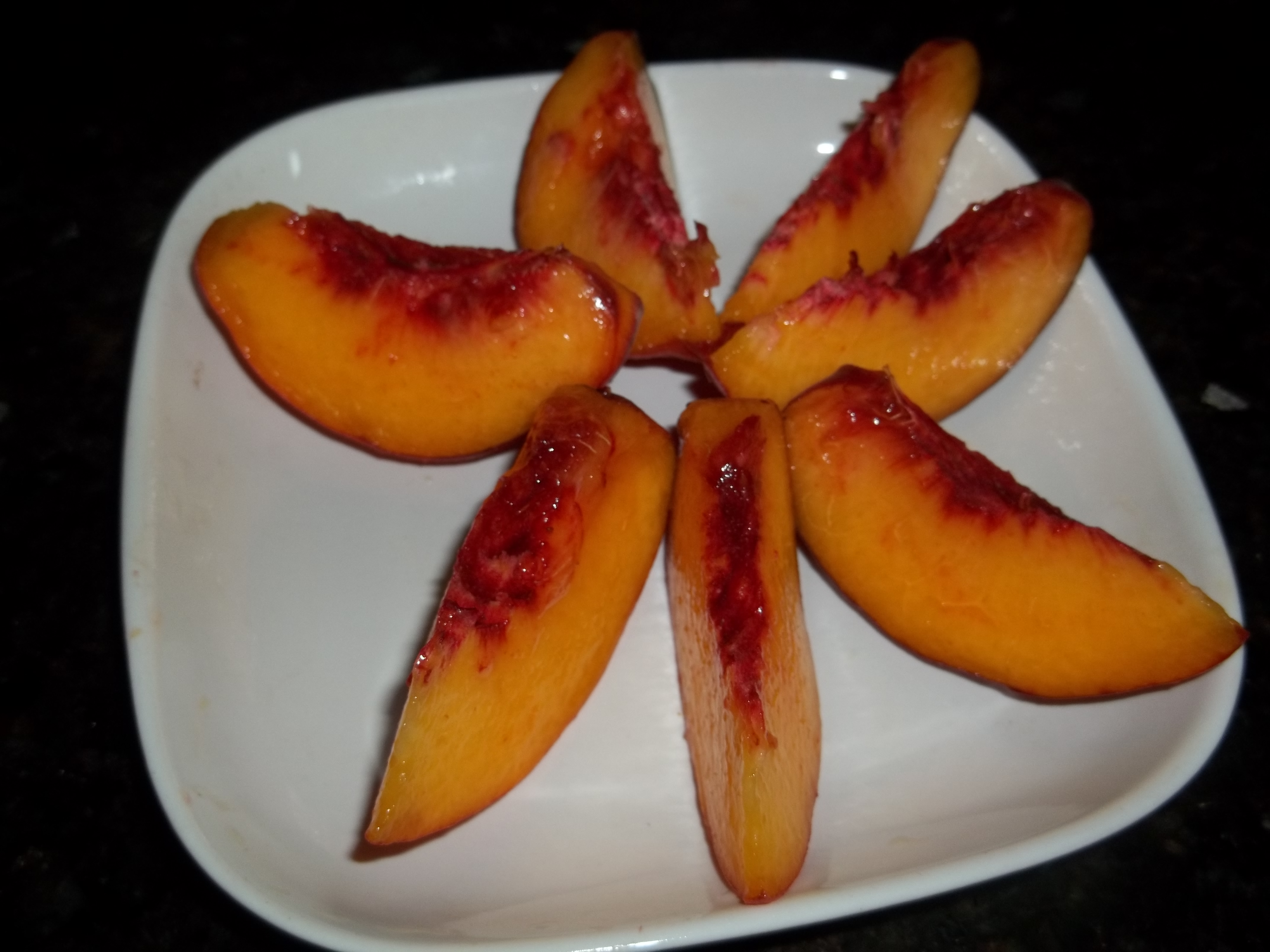
I use the lines from Mary Oliver which speak to paying attention, being astonished, and telling about it often.  I find it applies to so many things:  nature, of course, but also words that I read, objects that I find and touch, people and our conversation, both joys and pain.  My recent posts about paying attention with not only our eyes and ears but also our sense of smell sharpened my savoring of these extraordinary peaches!  They are a wonder to behold with their brilliant crimson and saffron colors, soft to the touch, and a succulent treat as you taste their sweetness. Even the seeds are so beautiful I can’t throw them away.  I have them lined up ready to let my granddaughter help me plant them.  When I enjoy a peach for breakfast, how could I not be attentive to the way it is beautiful inside and out?

“Ten times a day, something happens to me lie this – some strengthening throb of amazement – some good sweet empathetic pin and swell.  This is the first, the wildest, and the wisest thing I know: that the soul exists and is built entirely out of attentiveness.”   ~ Mary Oliver, New and Selected Poems, Vol. 1

“You can have the other words – chance, luck, coincidence, serendipity.  I’ll take grace.  I don’t know what it is exactly, but I’ll take it. ”  ~ Mary Oliver, Winter Hours

Breathe

When I visited one of the garden centers in Houston recently, this sign caught my eye since I had just written the previous post about fragrance.  Many of the plants in our back yard garden could be labeled “featuring fragrance.”  A plant that is new to me is actually a very old-fashioned one.  Sweet almond verbena reaches out to my nose with its sweet smell and a hint of vanilla.  It is no surprise to find that this reminds me to pray with each breath, inhaling God’s goodness and peace and letting out all my fretting. Remembering the Biblical references to our prayers as a fragrant incense, I smiled when I read that another name for this plant is Incense Bush.  Breathe!

Fragrance


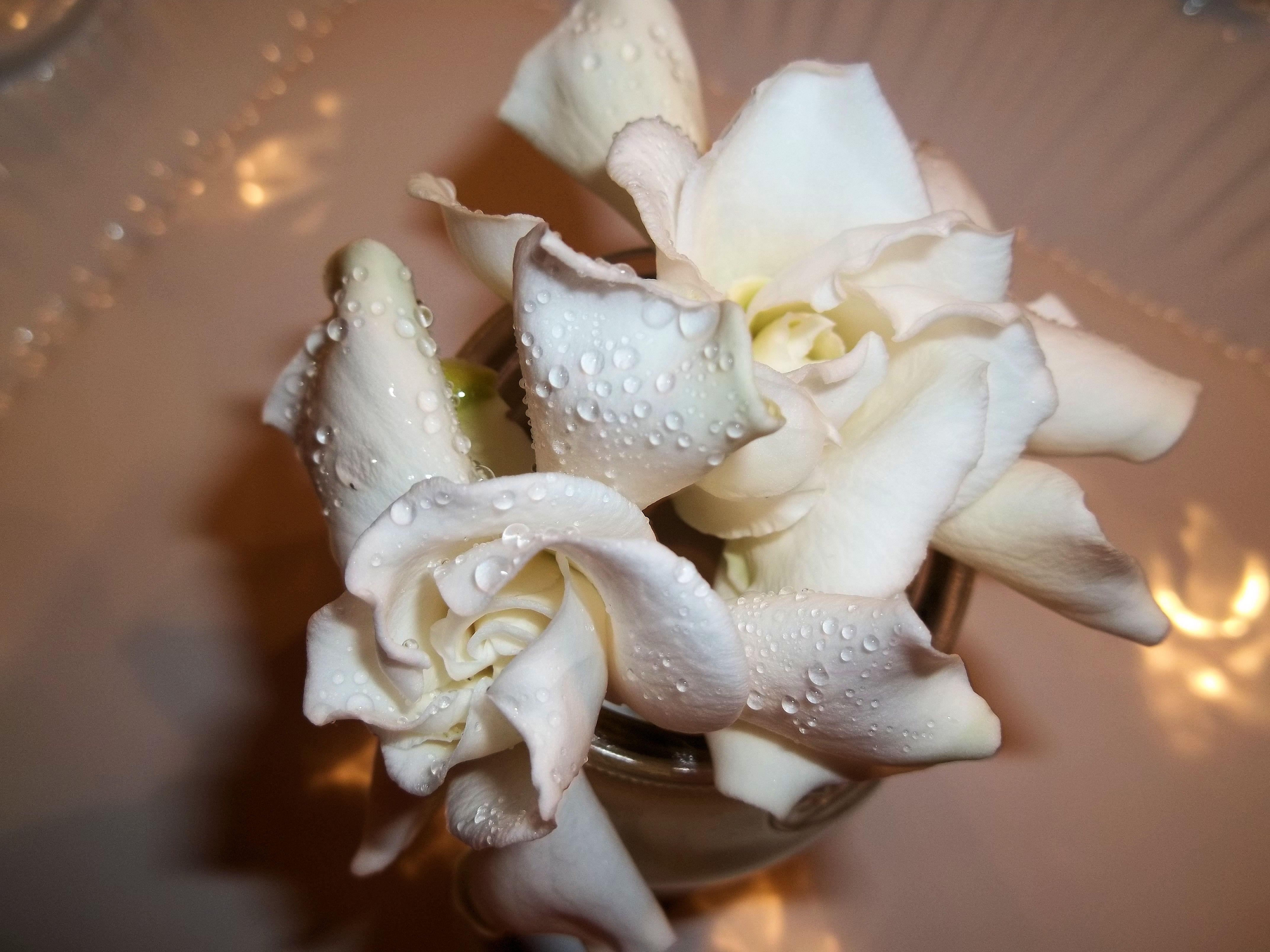
Paying attention is not just for eyes and ears. This week I am aware that being present to the fragrance in my garden brings a sharpened awareness of beauty and story. Joe brought these gardenias inside this morning. How lovely they are, shining with dew. But their sweet smell reached me before anything else.  I breathe deeply and say “thank you”, remembering all the way back to those that bloomed by our front porch when I was a little girl.


Pay Attention

“To pay attention, this is our endless and proper work.”   ~  Mary Oliver, “Yes! No!”

Joe and I attended the same highschool in Jacksonville, Texas . Over fifty years later, we talk about how grateful we continue to be for good teachers who taught us well, expected much, and by their example and instruction gave us more than knowing how to construct sentences, write paragraphs, solve equations, and appreciate art,  history,  geography, music and sports.  Lois Boles, Frances Childress, James Everett, Mr. Mosely, Signora Mullinix,  Jerry Robinson, Bill Ingram spring to mind quickly.  But a spry lady we called Miss Kate (Kate Stadler) who taught typing, used an expression so often in her classes that we still use it.   “Pay Attention!”  Miss Kate demanded attention to detail with expected results in skill and accuracy.  I am pretty sure she didn’t intend application beyond keyboard skills or think that as years went on, paying attention would be a skill that would become something to live by.  I am certain that I did not understand the phrase as more than a requirement until much later.  In its simplicity, there lies a risk of underrating its scope and impact. But it has become a compelling imperative, one that helps me see the intersection of faith and creation and art. No surprise, my favorite Mary Oliver quotation expresses this well.

“Instructions for living a life:

Pay attention…

Be astonished…

Tell about it!”              ~  Mary Oliver, “Sometimes”

Secret Garden

A book which is now considered  a classic children’s book of the twentieth century, Secret Garden by Frances Hodgson Burnett was published as a novel in 1911.   Its story, full of loss and gain, tragedy and triumph develops as children and a garden grow and change.  There have been a number of productions produced for movies and television which bear the name and tell the story. But the movie version created in 1949 is the one which lives in my memory.  I was 9 years old, and not allowed to see many films.  The scene which so impressed me was one of sudden change. Almost the entire film is in stark black and white. The scene in which the door to the garden is opened to reveal the beauty of the garden in vivid Technicolor created a breathtaking moment.  Little girls weren’t the only ones to gasp.

It is only these many years later that I am understanding that I was far more than entertained by this. In this story, it is only as Mary begins to think of others rather than herself that she became more than a spectator of the garden.  As her perception as well as her vision changed,  the garden became more beautiful.

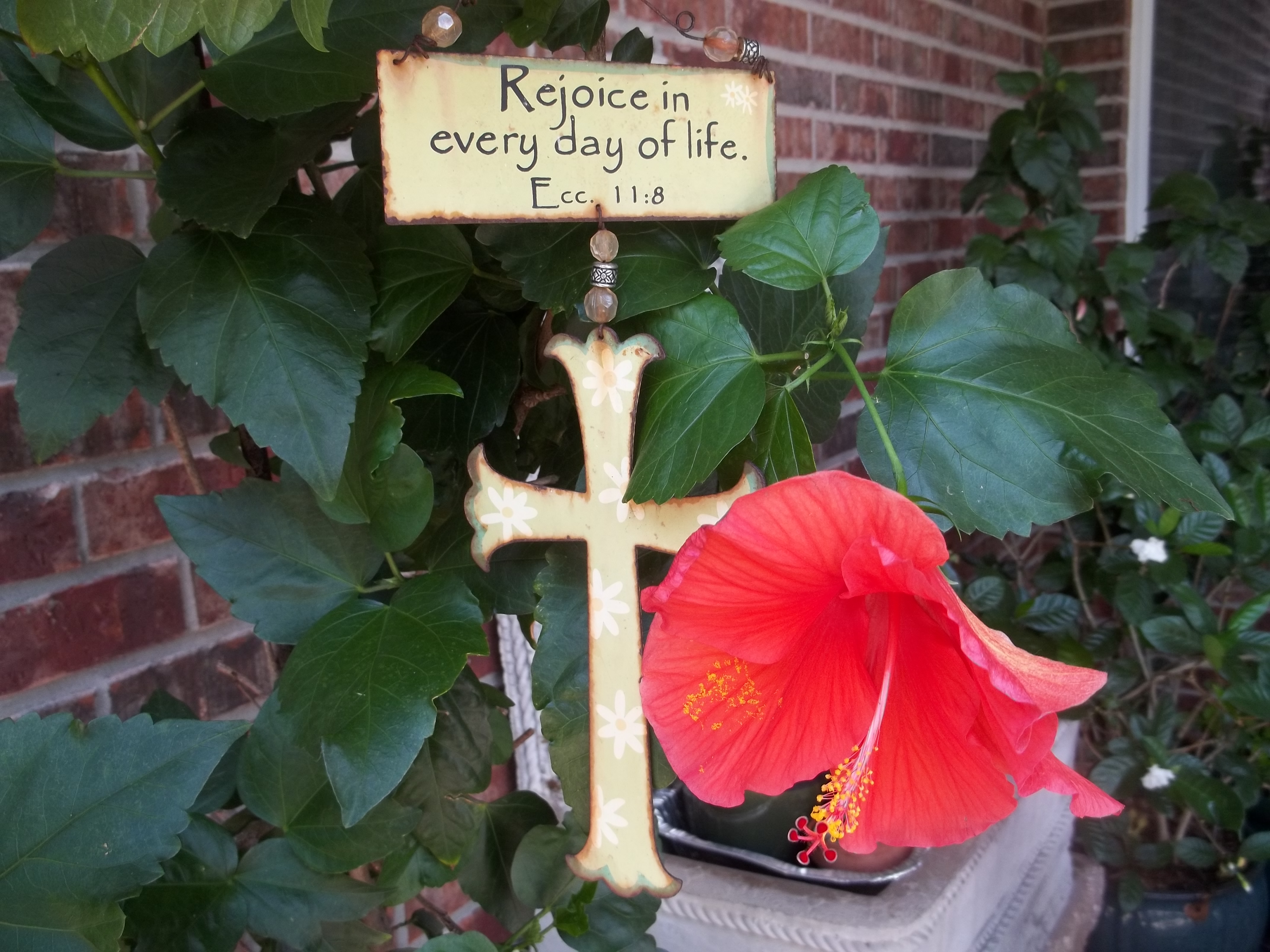
This photo is a sign in our garden that has become intertwined in a yellow climbing rose.  It reminds me of that other Mary, and of the miracles created when I see beyond myself.

“And the secret garden bloomed and bloomed and every morning revealed new miracles.” ― Frances Hodgson Burnett, The Secret Garden


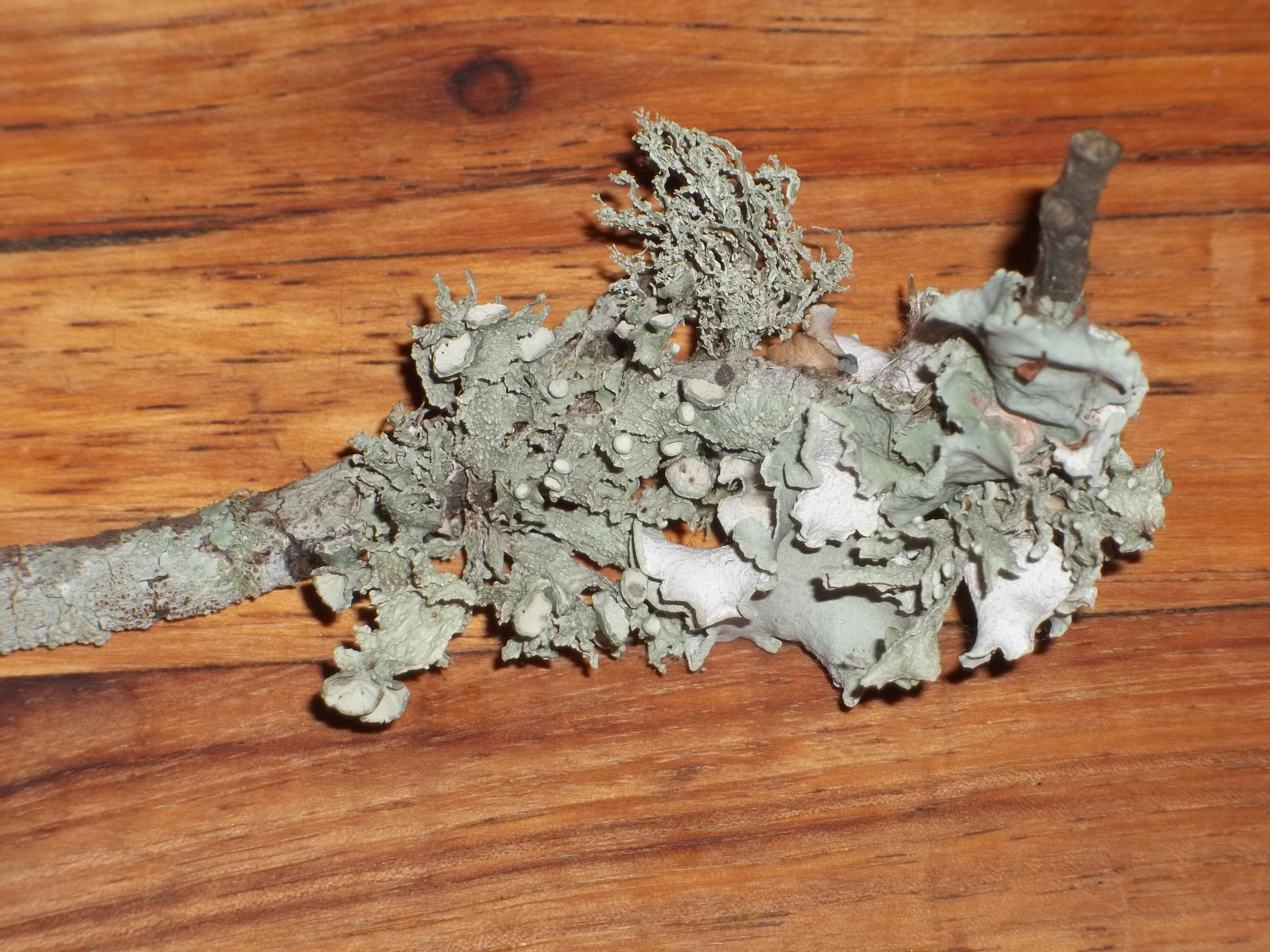
Lichen

Lichens are intriguing. Often the first form of life to colonise a new area of rock, they are commonly seen and also commonly overlooked. They frequent older buildings, stone walls, and most perennial plants, particularly trees. Lichens are important because they often occupy niches that, at least sometime during the season, are so dry, or hot, or sterile, that nothing else will grow there.

In the hot and dry times in my life that seem unproductive, it may be that Grace is growing a bit of lichen – some small ruffled newness that needs no notice but still proclaims life and growth.

Yes

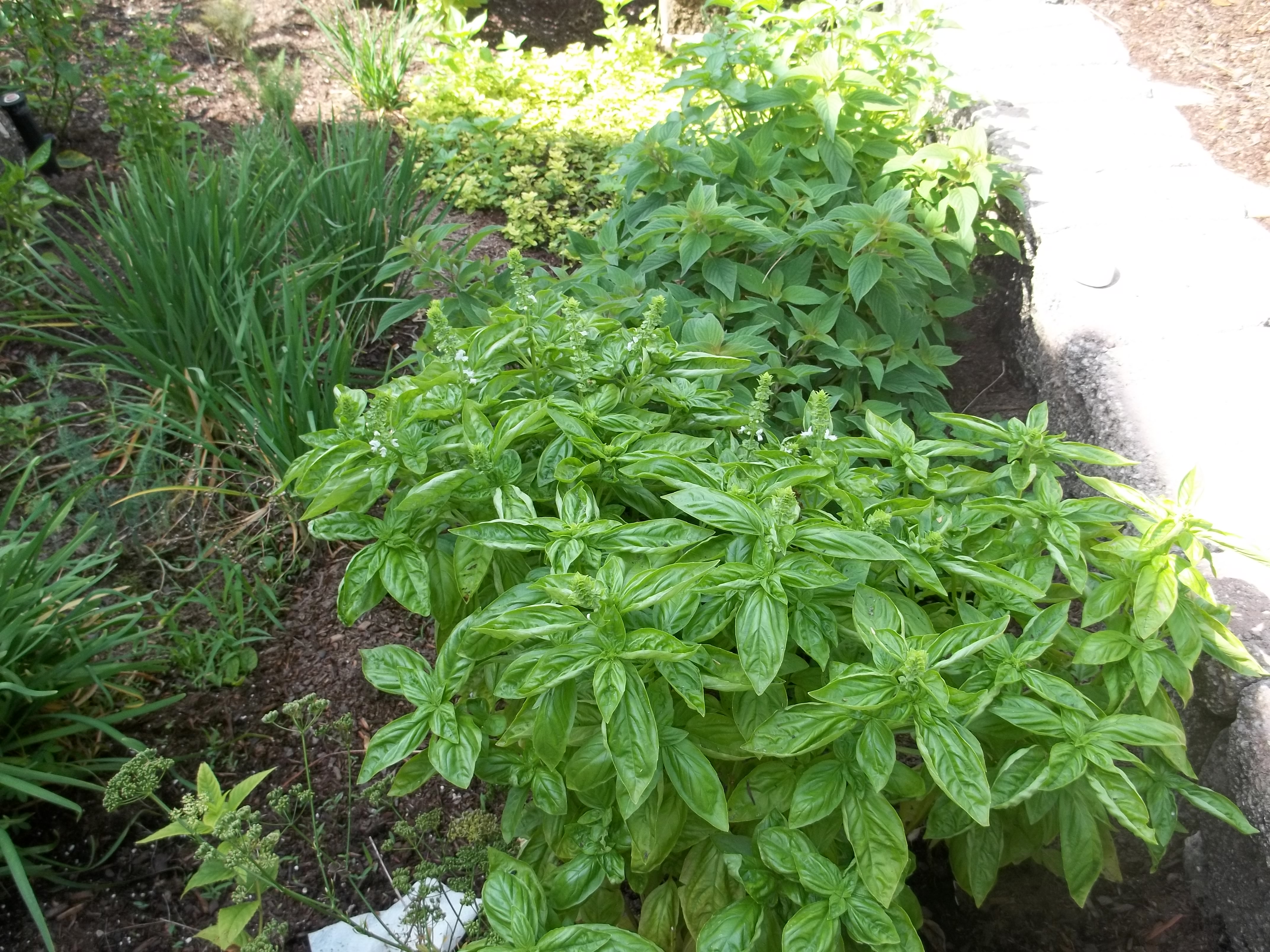
It is easy to fall prey to complaining these days when the temperature registers 105 and most people, animals, and plants slow their pace and wilt.  I remind myself that the same blistering sun that sears my skin and makes getting into my truck seem like opening an oven door also flavors my herbs and ripens the figs on our tree. Lord, help me be alert to the yes in every day.

i thank You God for most this amazing day:for the leaping greenly spirits of trees and a blue true dream of sky; and for everything which is natural which is infinite which is yes
(i who have died am alive again today, and this is the sun’s birthday; this is the birth day of life and of love and wings: and of the gay great happening illimitably earth)
how should tasting touching hearing seeing breathing any–lifted from the no of all nothing–human merely being doubt unimaginable You?
(now the ears of my ears awake and now the eyes of my eyes are opened)

— from E.E. Cummings: Complete Poems 1904-1962, by e. e. cummings